Senso-ji Temple, Tokyo: How NFL Stars Capture Tokyo's Oldest Sacred Site
Featured Collection
Introduction
Founded in 628 AD, Senso-ji is officially Tokyo’s oldest Buddhist temple. With its iconic vermilion gates, towering paper lanterns, and the bustling Nakamise shopping street, it remains one of the most recognizable historic landmarks in Japan.
Unsurprisingly, Senso-ji is a top favorite among visiting NFL players. Passing under the Kaminarimon (Thunder Gate), strolling through Nakamise-dori toward the Hozomon Gate, offering prayers at the Main Hall (Hondo), and gazing up at the majestic Five-Story Pagoda—this classic sightseeing route is familiar to Japanese locals, but how do elite American athletes capture these ancient grounds through their camera lenses?
In this article, we trace the history, culture, and hidden details of Senso-ji through the remarkable photographs taken by visiting NFL stars.
1. Kaminarimon (Thunder Gate)
Standing proudly at the main entrance to Senso-ji’s outer approach, Kaminarimon serves as the undisputed symbol of the Asakusa neighborhood. Officially named Furaijin-mon (“Wind and Thunder God Gate”), it houses the God of Wind (Fujin) on the right and the God of Thunder (Raijin) on the left. Hanging beneath its center is a massive red paper lantern—a legendary photo spot welcoming travelers from all over the globe.
JuJu Smith-Schuster
This striking shot captures the golden plaque reading “Kinryuzan” (Senso-ji’s official mountain name) and the impressive scale of Kaminarimon’s central red lantern. The statue of Raijin (the Thunder God) is visible on the far right of the frame. Smith-Schuster’s caption, “Wind & Thunder,” shows his deep appreciation for the gate’s guardian deities and cultural origins.

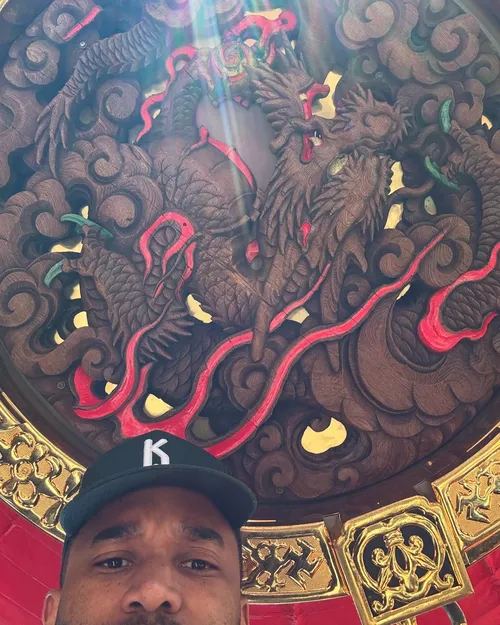
Justin Hollins
Hollins took a truly unique selfie looking straight up at the intricate wooden dragon carving under the base of the giant red lantern. According to temple legend, a golden dragon appeared overnight when Senso-ji was first established—giving birth to its mountain name, Kinryuzan (“Golden Dragon Mountain”). Hollins’ angle highlights a detail that even many casual tourists miss.
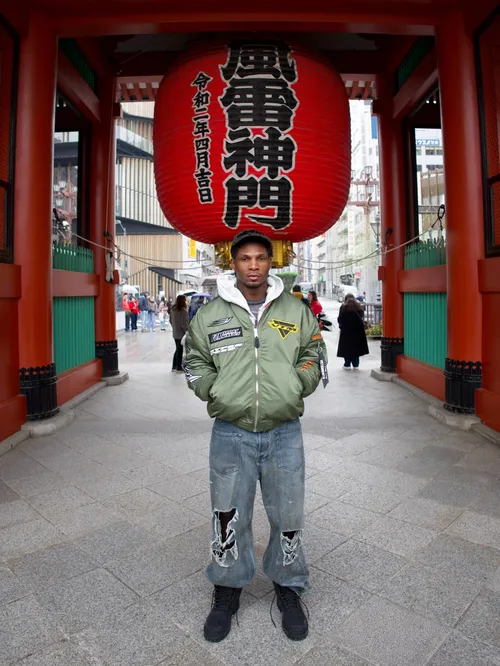
Malik Turner
Shot from behind the gate looking back toward the entrance approach. While the front of the gate is world-famous for its “Kaminarimon” lettering, the reverse side prominently displays the gate’s official historic title: “Furaijin-mon.” Turning around offers a fresh perspective on a familiar landmark.
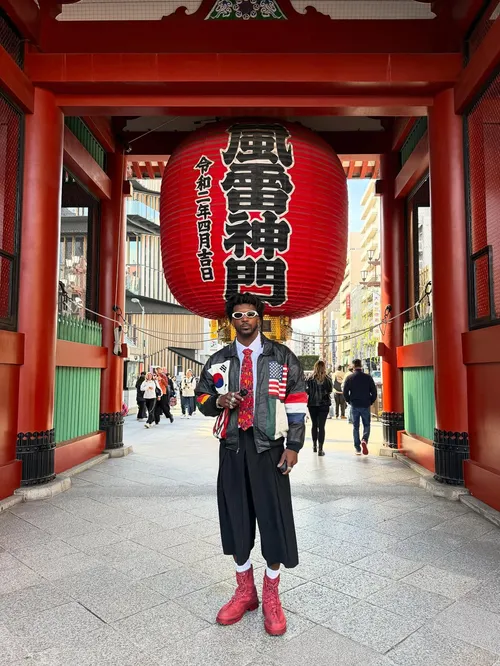
Siran Neal
Sharing a virtually identical angle with Turner, Neal captures the rear of the gate. For international travelers, shooting Kaminarimon from the inside provides an unobstructed frame of the traditional architecture and lantern away from the dense front crowds.
2. Nakamise Shopping Street
Stretching approximately 250 meters (820 feet) from Kaminarimon to Hozomon Gate, Nakamise-dori is one of Japan’s oldest shopping streets. Lined with traditional stalls offering souvenirs, crafts, and classic Japanese sweets, its stone-paved walkway buzzes with vibrant energy.
Eric Wilson
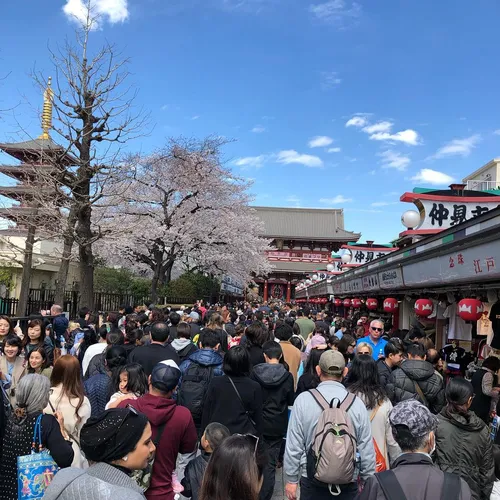
A rich, picture-perfect composition featuring the Five-Story Pagoda and cherry blossoms on the left, traditional shop roofs and red lanterns on the right, crowds of visitors below, and Hozomon Gate framed in the center. It vividly captures the joyful energy of Asakusa during full cherry blossom season.
Aidan Hutchinson
Hutchinson enjoyed local street food along Nakamise with his family, stopping by Funawa—a legendary confectionery shop founded in 1902. Enjoying their famous sweet potato soft-serve ice cream, this candid moment overflows with the joy of exploring Tokyo with loved ones.

Ricky Pearsall
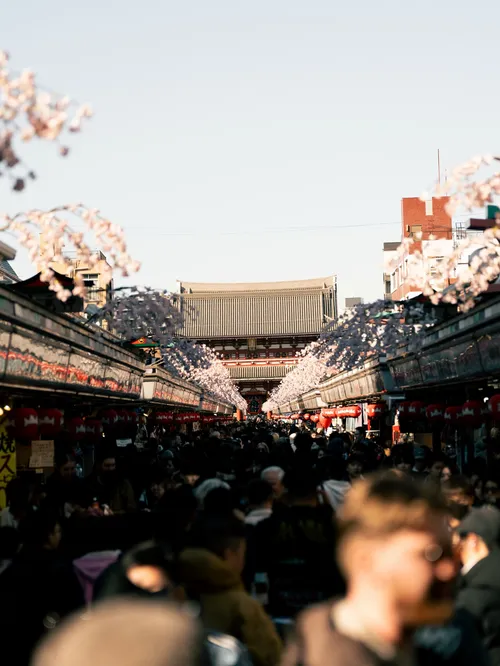
Using a shallow depth of field, Pearsall blurs the foreground crowd and cherry blossom decorations to bring Hozomon Gate into sharp focus down the center perspective line. By softening the surrounding bustle, the photo creates a dramatic contrast that evokes the timeless history and quiet majesty of the temple.
Siran Neal
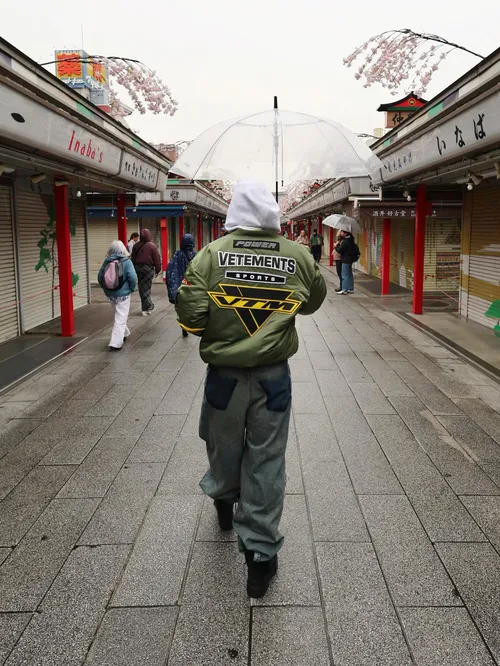
A stylish back-shot capturing Neal walking down Nakamise-dori on a rainy day under a clear vinyl umbrella. The glistening wet stone pavement and quiet morning atmosphere showcase a poetic, moody side of Asakusa rarely seen in sunny daytime photos.
Justin Jefferson
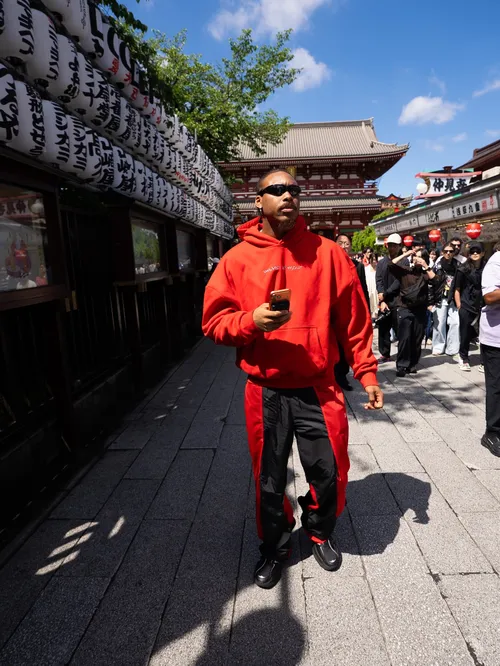
Posing in bright red streetwear against the vermilion gates and red lanterns, Jefferson creates an unforgettable frame. The collision between Senso-ji’s historic Japanese aesthetic and contemporary American sports fashion iconology looks right off the cover of a fashion magazine.
3. Hozomon Gate
Exiting Nakamise-dori leads to a wide open courtyard anchored by Hozomon (“Treasure House Gate”). Hanging from the center is a massive paper lantern donated by the Kobunacho merchant community of Nihonbashi, flanked by two black Uogashi (fish market) lanterns. Two fierce Nio guardian statues stand watch on either side to protect the sacred precinct.
Jaelan Hawkins
Framing the open sky and surrounding space, Hawkins captures the entire structure of Hozomon Gate along with the long shadows cast by visitors across the ground, creating a high sense of presence and realism.

Aidan Hutchinson
Standing at 6-foot-7, Hutchinson reaches up toward the delicate brass fittings under the central Kobunacho lantern in a playful vertical shot. Even for an elite NFL athlete of his stature, the giant lantern’s scale is overwhelming, creating an entertaining mix of humor and appreciation for traditional craftsmanship.

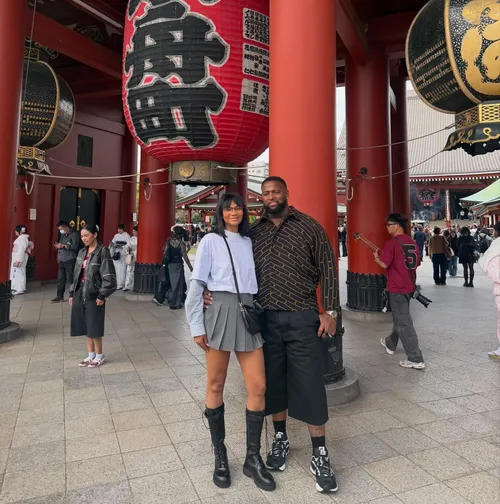
Davon Godchaux
A tightly framed shot focusing on Hozomon’s intricate architectural details, including the Kobunacho lantern and fish market lanterns. Godchaux’s partner, fashion model Chanel Iman, stands out elegantly against the rich vermilion pillars.
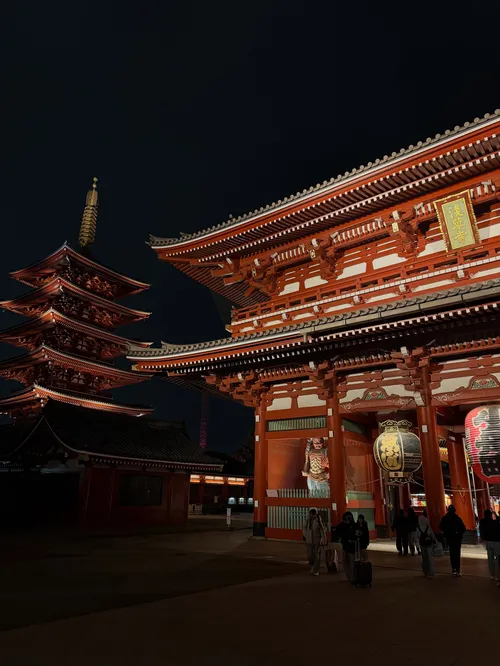
Jeffrey Bassa
Shot at a diagonal angle during the night, Bassa’s photo incorporates both Hozomon Gate and the Five-Story Pagoda in a single frame. The evening illumination bathes the guardian statues and lanterns in a warm golden glow, producing an ethereal, premium atmosphere completely different from daytime.
4. Jokoro (Large Incense Burner) & Courtyard
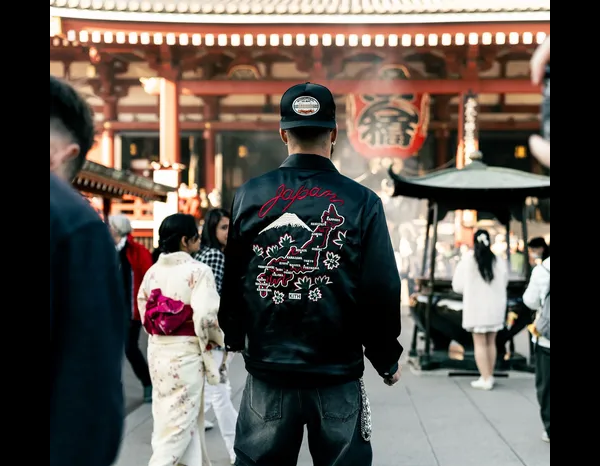
Located in the center of the inner courtyard between Hozomon Gate and the Main Hall stands the Jokoro—a massive bronze incense burner. In Japanese Buddhist tradition, visitors bathe themselves in the rising aromatic smoke before entering the hall, a purification ritual believed to bestow health, clarity, and blessings.
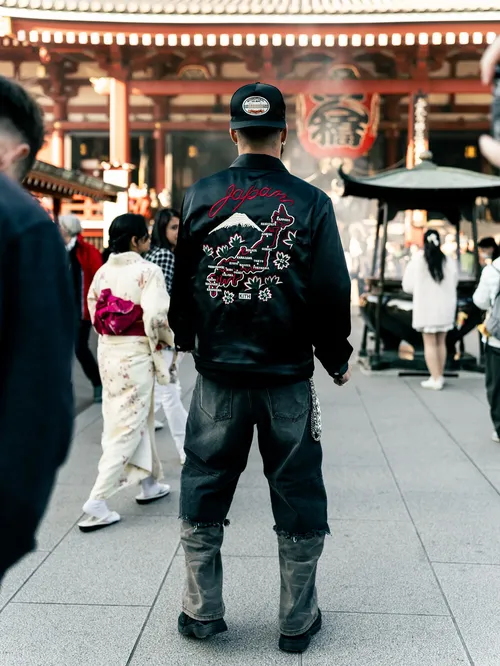
Ricky Pearsall
Pearsall stands in front of the Jokoro wearing a classic Sukajan (Japanese souvenir jacket). With the word “Japan” embroidered across his back aligned perfectly with the Main Hall and central red lantern, the photo beautifully bridges American street culture and traditional Japanese heritage.
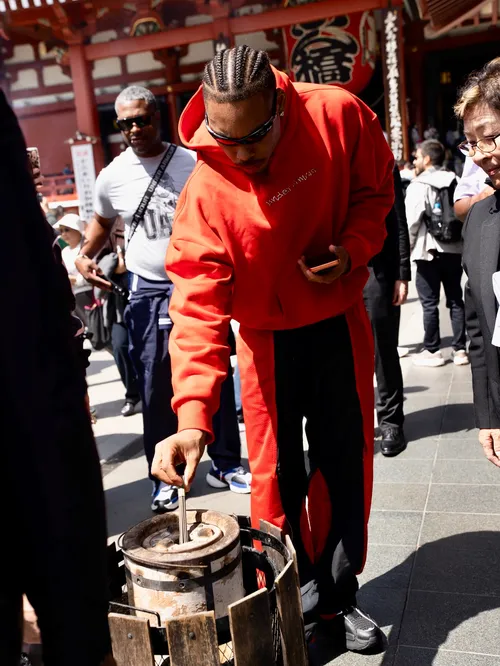
Justin Jefferson
A quiet, respectful moment captured as Jefferson stands before the smoke wafting from the Jokoro. Rather than viewing the burner as a simple prop, his sincere posture reflects a genuine respect for local customs and spiritual purification practices.
5. Main Hall (Hondo / Kannon-do)
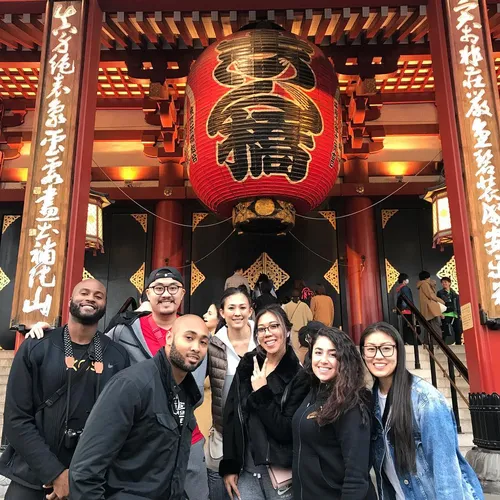
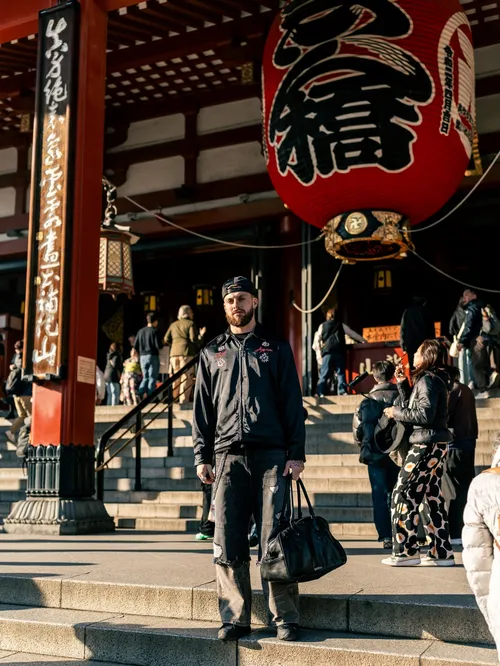
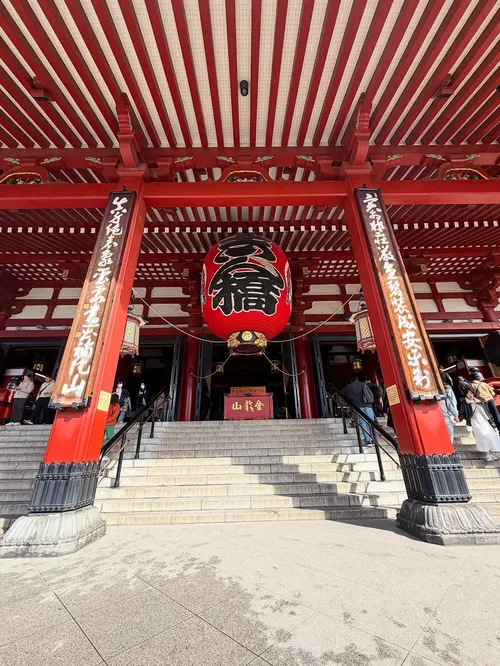
The heart of Senso-ji is the Main Hall (Hondo), dedicated to Kannon, the Bodhisattva of Compassion. Hanging over the main entrance steps is a gigantic red paper lantern donated by the Shinbashi merchant guild (Shinbashi-kumiai). Together with the lanterns at Kaminarimon and Hozomon, it completes Senso-ji’s trio of historic votive lanterns.
K.J. Wright
Wright and his companions pose with natural smiles directly in front of the giant Shinbashi lantern at the top of the Main Hall steps. The image captures a heartwarming sense of completion as the group reaches the ultimate destination of their temple walk.
Ricky Pearsall
Standing poised at the base of the Main Hall staircase, Pearsall creates a striking low-angle portrait. The dramatic perspective emphasizes the sheer height of the temple roof and giant lantern behind his street-style outfit.
Malik Turner
Utilizing an ultra-wide-angle lens, Turner captures the dynamic radial geometry of the Main Hall’s roof rafters and multi-tiered timber construction. Looking up from the stone steps, the symmetrical wide angle conveys a sense of awe and reverence.
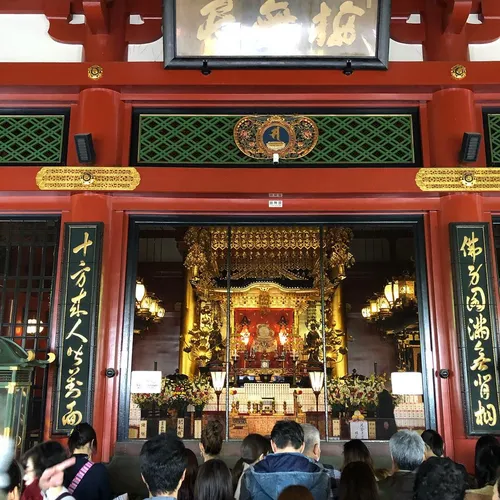
Eric Wilson
Looking deep into the interior, this frame captures worshipers quietly bowing and offering prayers before the altar enclosing Senso-ji’s sacred Kannon statue. It serves as a gentle reminder that Senso-ji is not merely a tourist destination, but a living house of faith.
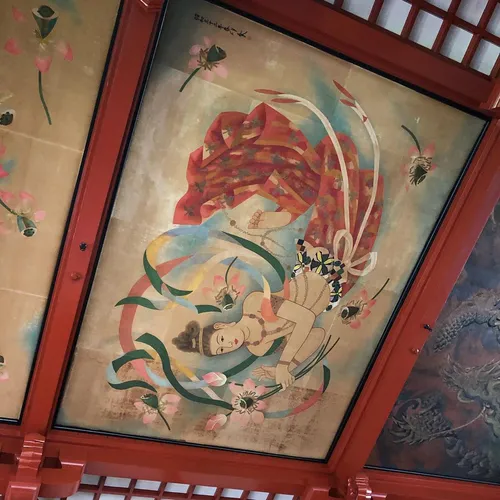
Wilson also looked straight up to photograph the outer hall’s ceiling masterpiece, Tenjin-no-Zu (Flying Apsaras), painted by master Japanese artist Insho Domoto. While many visitors focus solely on the altar or offering box, Wilson’s eye for detail led him to discover one of the hall’s hidden artistic treasures.
Adrian Peterson
Turning around after paying respects at the Main Hall offers a panoramic view across the courtyard. Peterson captures Hozomon Gate in the distance, the amulet hall on the left, and plumes of incense smoke drifting through the air—a balanced shot summarizing the entire temple pilgrimage.

6. Five-Story Pagoda (Gojunoto)
Soaring into the skyline southwest of the Main Hall, the Five-Story Pagoda houses sacred Buddha relics (busshari). Rebuilt with vibrant vermilion timber and topped with a bronze spire (so-rin), the pagoda stands as a dominant landmark on the temple grounds.
Drake Maye
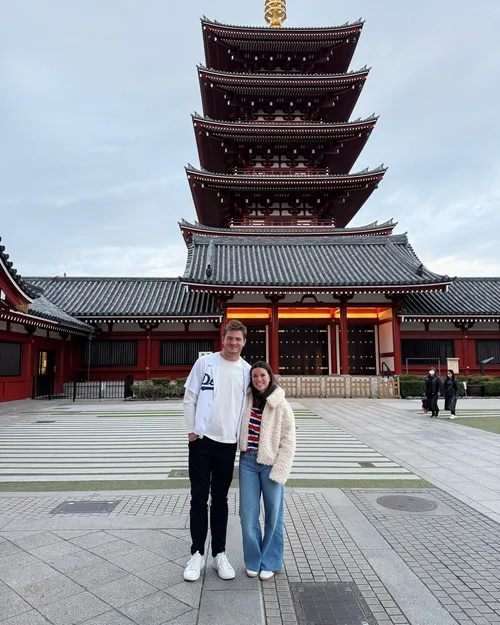
The open plaza directly in front of the pagoda is one of the most famous commemorative photo spots in Asakusa. Shot from a low angle, Maye’s full-body portrait highlights both his athletic presence and the impressive height of the pagoda behind him.
Al-Quadin Muhammad
Photographed from an elevated position along the Main Hall terrace, this perspective captures not only the full spire of the Five-Story Pagoda, but also the bustling crowd below. Framing the shot with the temple’s wooden railing and roof eaves draws the eye naturally toward the pagoda.

Ricky Pearsall
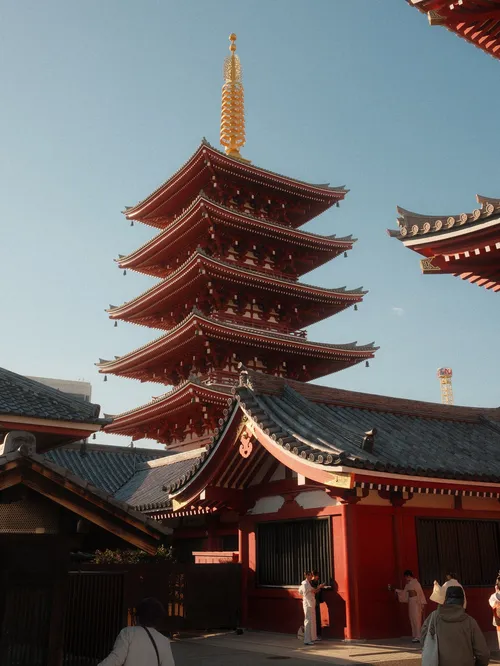
As the late afternoon sun dips low, warm golden light illuminates the vermilion structures and kimono-clad visitors. It’s a nostalgic, painterly snapshot filled with peaceful evening atmosphere.
7. Conclusion
Tracing the photos left behind by visiting NFL players reveals the rich, multi-faceted beauty of Senso-ji. From iconic souvenir shots at Kaminarimon to looking up at lantern carvings, wandering Nakamise on a quiet rainy morning, or admiring the Five-Story Pagoda at dusk, each athlete captures a unique slice of Tokyo’s history.
Senso-ji is an absolute must-visit landmark for anyone traveling to Tokyo. Even for those who have visited before, viewing the temple grounds through the eyes of these elite international athletes offers fresh discoveries and new appreciation.
On your next visit, take time not only to snap a photo at the main gates, but also to look up at the intricate craftsmanship, pause at the incense burner, and take in the timeless atmosphere of Tokyo’s oldest sanctuary.