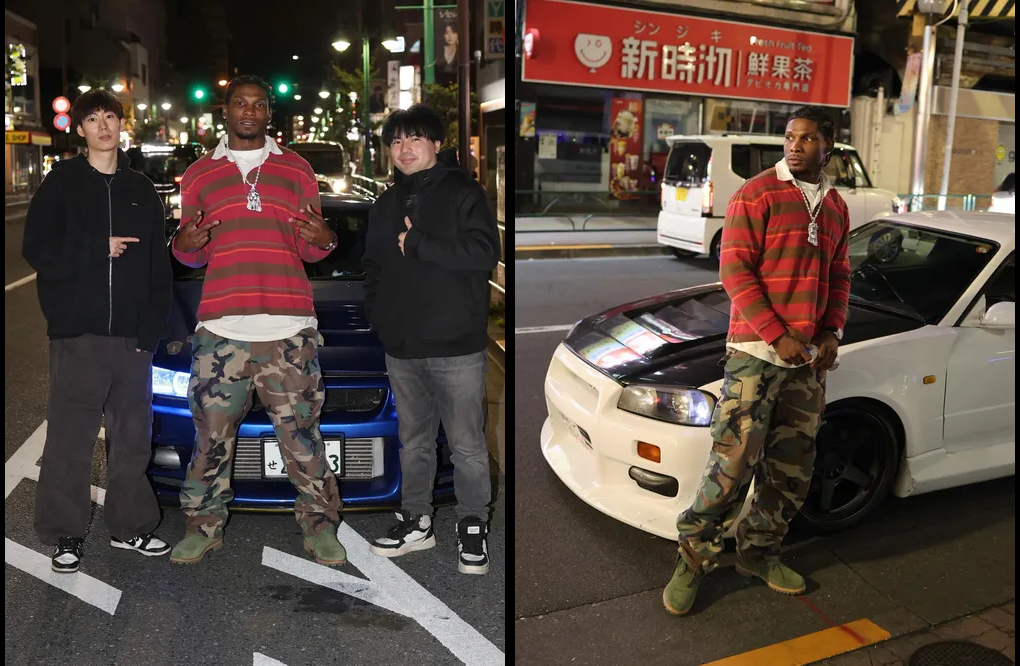
Why NFL Stars Love JDM: The Appeal of Japan's Car Culture Seen Through Their Photos
Featured Collection
The JDM Boom and the 25-Year Rule
When documenting visits to Japan by NFL players, I occasionally come across photos where I think, “Wait, is this player a huge car enthusiast?”
I wouldn’t call myself a knowledgeable car expert. At first, I simply thought, “Oh, they must like Japanese cars.” But as I looked closer at the vehicles and locations featured in their photos, I realized something remarkable: while most Americans view Japanese cars simply as reliable, practical daily drivers, there is a passionate group of American car enthusiasts to whom Japanese cars and Japan’s unique automotive subculture hold a deeply special, almost legendary status.
Using the photos taken by NFL players during their trips to Japan as a gateway, I decided to do a little research into why this dedicated community of foreign car lovers is so deeply drawn to Japan.
The term “JDM” (Japan Domestic Market) originally referred specifically to vehicles and parts manufactured strictly for use within Japan. Overseas, however, the term has broadened among car enthusiasts to encompass Japanese sports cars as a whole, as well as Japan’s distinct custom car culture.
The rise of Japanese sports cars into iconic status in the United States began around the late 1990s, heavily fueled by video games, movies, and anime. Franchise titles like Gran Turismo introduced young Americans to high-performance icons like the Nissan Skyline GT-R and Mitsubishi Lancer Evolution; anime like Initial D highlighted the lightweight Toyota AE86 and Mazda RX-7; and The Fast & Furious movie series firmly placed cars like the Toyota Supra and GT-R on the global pop-culture map. Vehicles that were relatively familiar sights on Japanese city streets became unattainable “dream cars” to a generation of young Americans.
Crucially, many of these Japanese-market sports cars were nearly impossible to buy or drive legally in the United States due to strict federal import rules. Under a regulation widely known as the “25-Year Rule,” vehicles originally manufactured for foreign markets cannot be legally imported or registered for normal road use until they turn 25 years old.
Because of this law, Japan represents a legendary landscape for American JDM fans: a real-world museum where iconic vehicles they grew up admiring in games and movies actually drive on everyday streets. As these classic 1990s models gradually reach the 25-year mark, more adult enthusiasts in the U.S. are finally purchasing and importing the real machines they spent years dreaming about.
Here are a few insights and discoveries I made while tracking NFL player visits to Japan, accompanied by their remarkable photos.
1. Daikoku PA: The Sanctuary of Night Meets
One of the ultimate symbols of Japanese car culture is the Daikoku Futo Parking Area (Daikoku PA), located on the Bayshore Route of the Shuto Expressway in Yokohama.
On weekend nights, local car owners spontaneously gather here to show off their custom builds, socialize, and admire each other’s work—a phenomenon widely known as a “night meet.” Thanks to social media, the unique atmosphere of Daikoku PA has spread across the globe, making it a bucket-list destination for international car lovers visiting Japan.
While local commuters see Daikoku simply as a highway rest stop, for overseas enthusiasts, it is an open-air, living gallery of genuine Japanese sports cars and custom tuning.
However, visiting Daikoku PA is very different from visiting a typical tourist attraction. Because it is located inside a high-speed highway interchange, entry on foot, bicycle, or public transit is strictly prohibited. Reaching the area requires a private car, taxi, or arranged ride.
More importantly, Daikoku PA is a public space, not an organized commercial auto show. Visiting car fans are expected to follow strict etiquette: never touching another owner’s car without permission, avoiding excessive noise or trash, and respecting the local community. The gathering exists purely through the goodwill and passion of individual car owners who choose to share their pride and joy with fellow fans.
This sense of mutual respect, combined with the journey required to get there, makes experiencing a Daikoku night meet feel all the more special for visiting international fans.
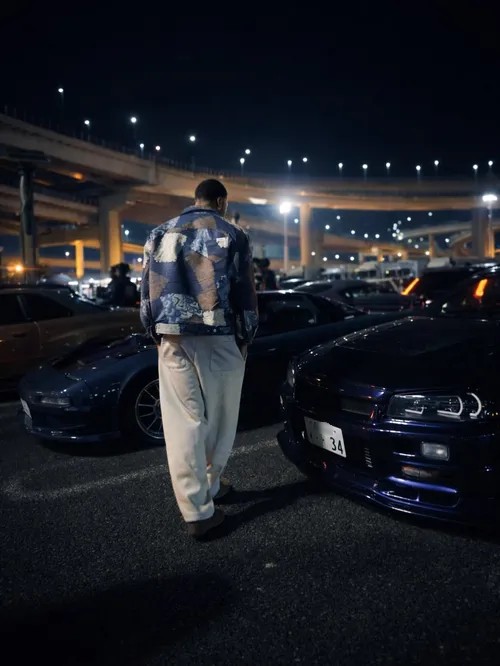
Quentin Lake
By positioning the player slightly to the left from behind, the viewer’s gaze is naturally guided toward the iconic symbol of Daikoku PA in the upper right—the massive, orange-lit loop structure of the Daikoku Junction. Parked to his right is a Nissan Skyline GT-R (BNR34), complete with a “34” license plate. With its deliberate composition and symbolic choice of car, this shot perfectly captures the nocturnal energy of a Daikoku night meet.
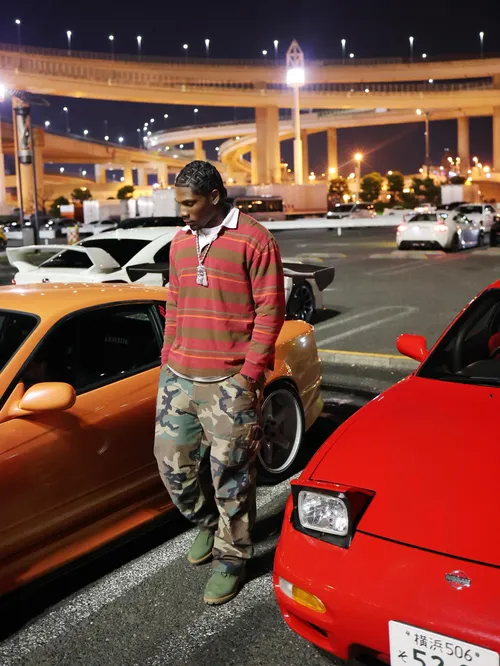
Siran Neal
The sweeping arc of the Daikoku Junction overhead spans the entire frame, capturing even the distant streetlights in crisp detail. In the foreground stands a bright red Nissan 180SX with its signature pop-up headlights raised. Wearing a red and khaki shirt, Neal blends effortlessly into the vibrant street-style scene alongside a vivid orange car parked right behind him.
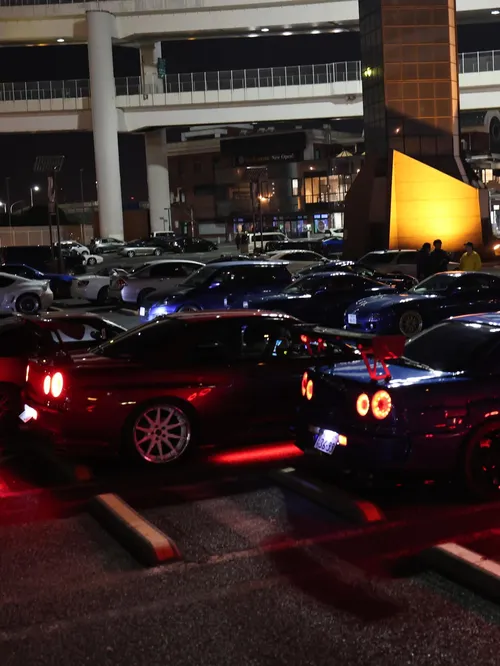
Directly underneath the glowing yellow tower and elevated highway ramps of Daikoku PA, the iconic round quad-taillights of a Skyline GT-R light up the dark, accompanied by the underglow neon lights made famous worldwide by The Fast and the Furious. With legendary sports cars lining the background, this photo captures the deep, atmospheric night scene straight out of a movie.
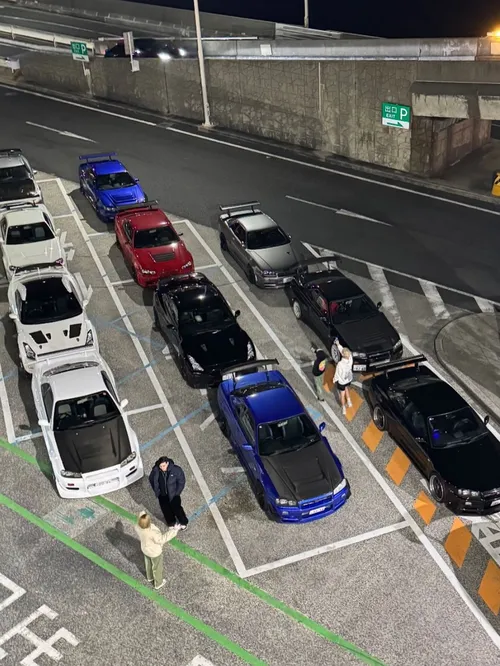
Shot from the second-floor deck looking down onto the parking lot and adjoining roadway, this top-down angle shows rows of prime JDM sports cars led by a Nissan Skyline GT-R (BNR34)—a textbook perspective of a late-night Daikoku gathering where owners and fans meet.
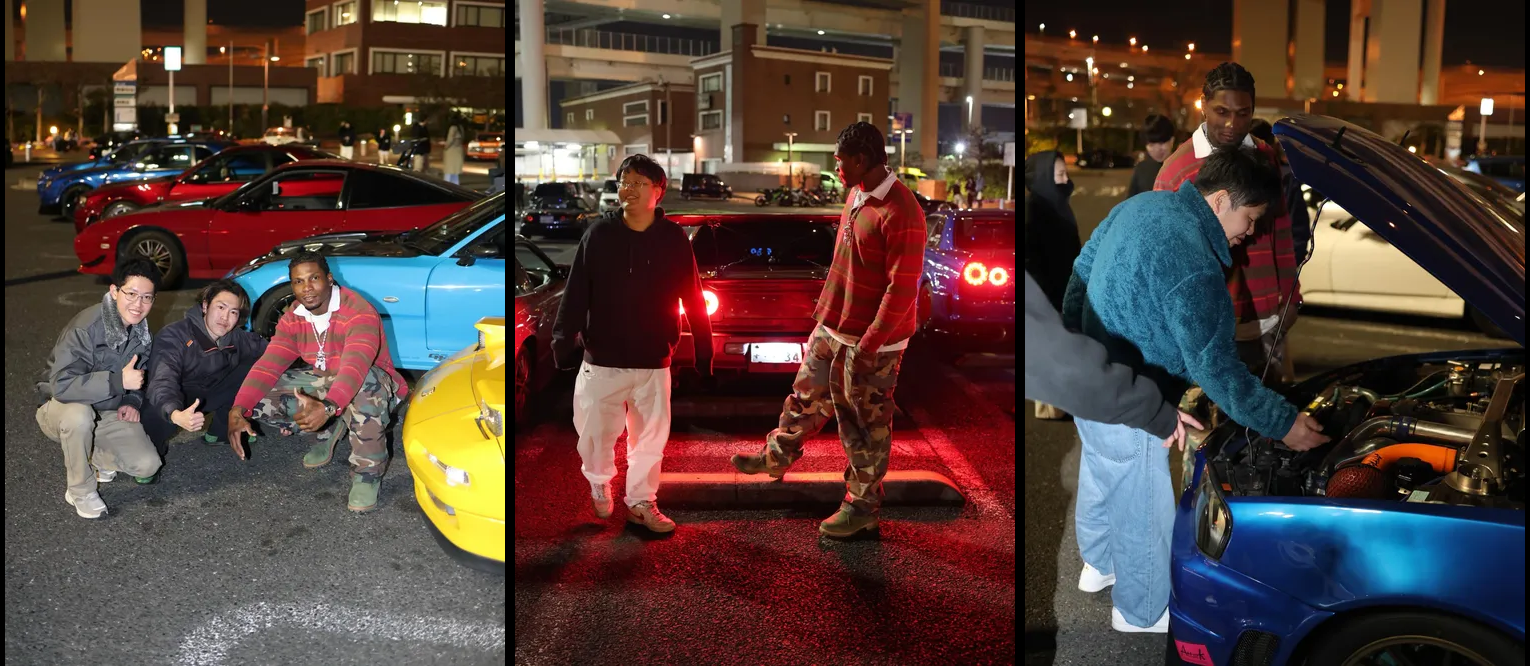
Siran Neal Neal actively connected with local car owners during his visit. The photo set captures him exchanging smiles and thumbs-up signs in front of custom builds, walking relaxed through the night heat, and peering closely under open hoods to chat about engine tuning.
Effortlessly crossing language and cultural barriers, Neal and his fellow enthusiasts bonded over a shared love for JDM. This collection of photos encapsulates exactly why Daikoku PA is revered worldwide as a holy ground for car culture.
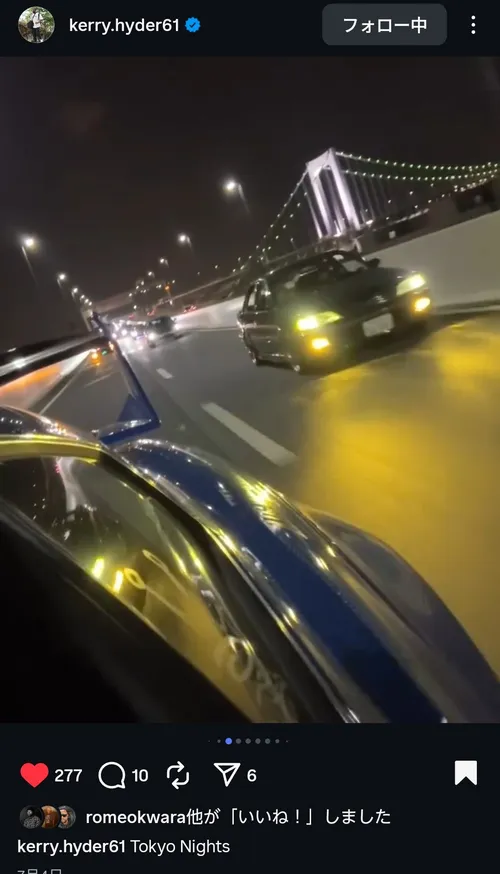
Kerry Hyder Jr.
Shining in the upper right background is the illuminated cable-stayed structure of the Rainbow Bridge—an emblem of Tokyo night drives. This location represents the classic highway route leading from central Tokyo toward Daikoku PA along the Wangan (Bayshore) line. Cruising alongside a sedan in the adjacent lane, this shot embodies the very essence of Hyder’s caption: “Tokyo Nights.”
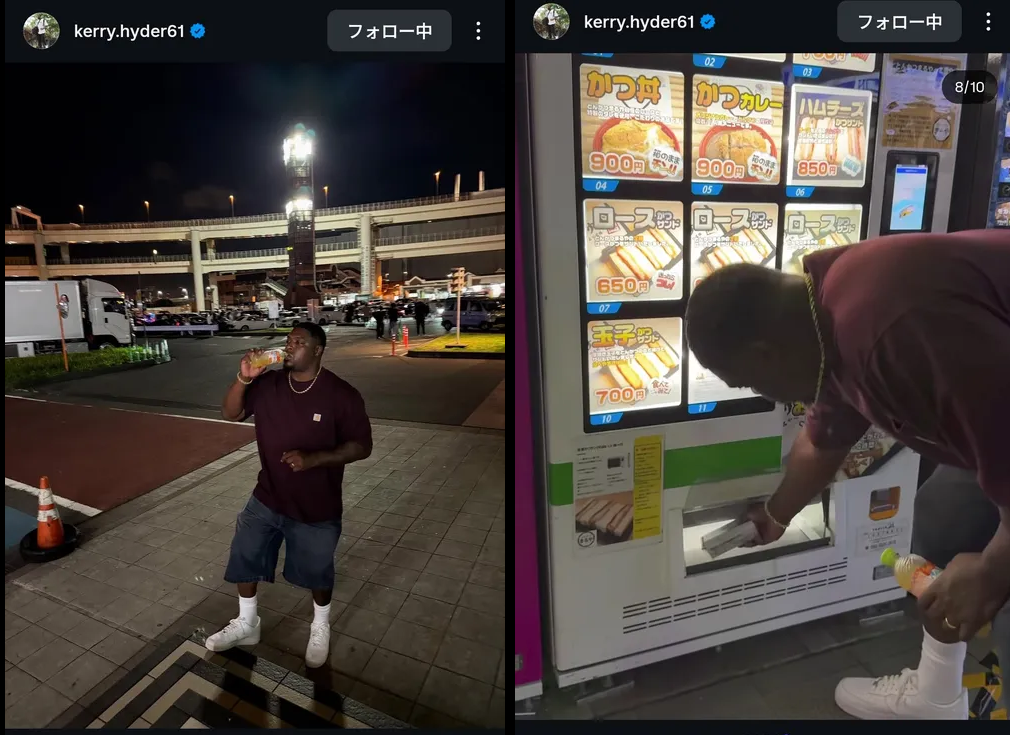
A moment of relaxation at Daikoku PA after enjoying a Shuto Expressway drive. On the left, Hyder sips a drink against the backdrop of the illuminated tower and junction loops. On the right, he browses Daikoku’s famous hot food vending machines. The photos highlight a fun mix of experiencing both Japanese vending machine culture—rare even in urban Japan—and the local JDM atmosphere.
2. LIBERTY WALK: Japan’s World-Famous Custom Style
Based in Owariasahi, Aichi Prefecture, LIBERTY WALK is a globally recognized Japanese custom car tuner.
Known for aggressively cutting factory body panels and riveting widebody overfenders onto modern sports cars and high-end supercars, Liberty Walk’s signature “LB-WORKS” style has become a defining emblem of contemporary Japanese tuning culture. Their presence extends far beyond Japan, regularly making waves at major international automotive showcases like the SEMA Show in Las Vegas. Several NFL players made a point to visit their official flagship store in Harajuku, Tokyo, located in the heart of Japan’s fashion district.
Jeffrey Bassa
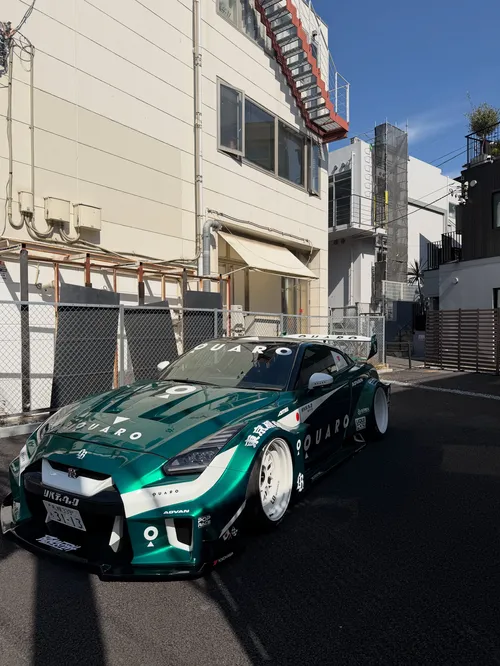
Taken at Liberty Walk’s flagship store, “LB-STORE TOKYO” in Harajuku/Jingu-mae. The metallic green body of the custom build shines beneath bold graphics featuring the kanji for “Tokyo Harajuku.” This photo reflects the sharp aesthetic instincts of these players, who tune into not just general car culture, but cutting-edge Japanese street trends.
Isaac Guerendo
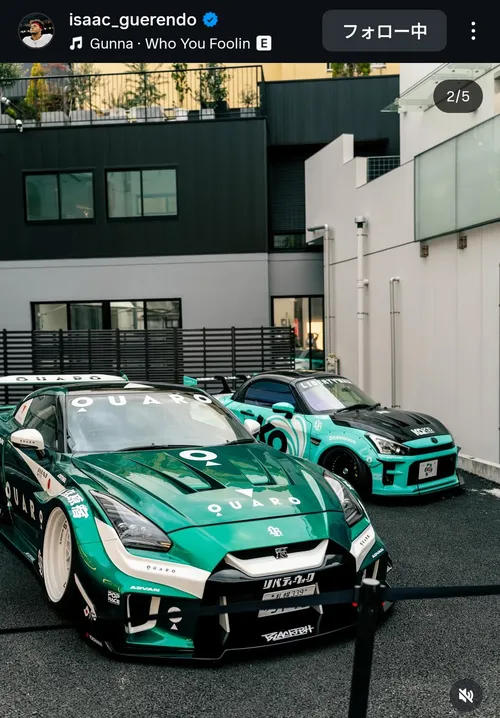
Standing inside “LB-STORE TOKYO” alongside complete custom builds that captivate car fans worldwide. In the foreground sits Liberty Walk’s flagship complete body kit model, the “LB-WORKS R35 GT-R.” Parked behind it is their playful, highly popular “GT-K” model—a Japanese Daihatsu Copen Kei-car retrofitted with a mini GT-R front fascia.
Myles Garrett
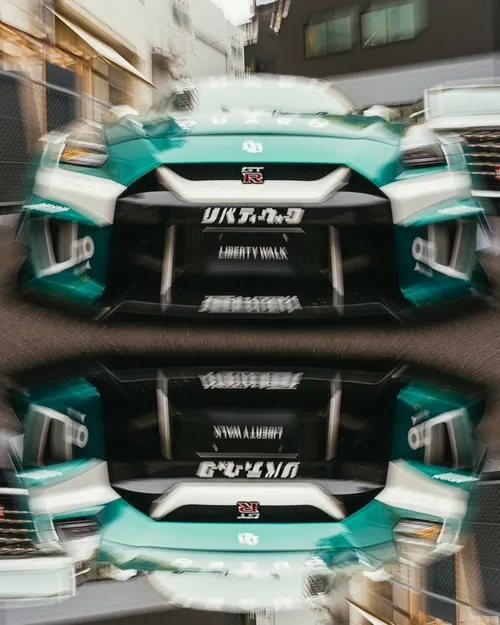
Combining strong radial motion blur with a symmetrical mirrored composition, this shot elevates the LB-WORKS R35 GT-R into something resembling an otherworldly art piece. Centering the “Liberty Walk” lettering and GT-R emblem, the photo balances speed and visual gravity—showcasing the artistic vision and technical skill of Garrett, who is also known for his passion for photography.
3. Diving into the Deep End: Auto Parts, Circuits, and Owner Meets
Samson Ebukam
Ebukam visited Fuji Speedway, the iconic motorsport circuit that hosts “SUPER GT”—Japan’s premier national grand touring race championship. Ebukam is a massive anime fan—in fact, on this day he was wearing pants printed with the name of Itachi Uchiha from NARUTO.
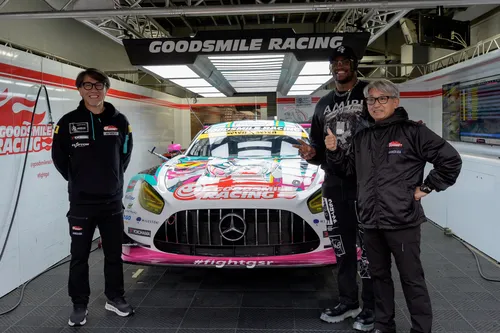
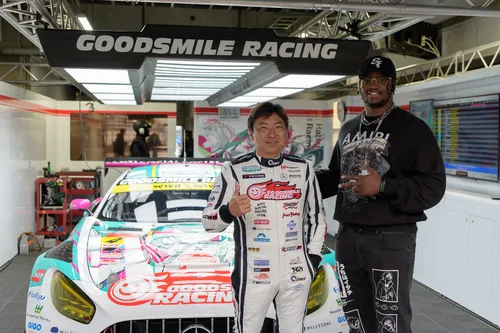
During his time at Fuji Speedway, Ebukam paid a visit to the pit garage of GOODSMILE RACING. The team is famous for competing in SUPER GT with their “Hatsune Miku GT Project” race car—a prime example of Itasha culture (cars decorated with anime characters). When the team first entered professional racing with full-body anime graphics, it was considered an unconventional, highly unusual sight in serious motorsport. However, GOODSMILE RACING proved their engineering and tactical strength by winning multiple GT300 class championships, transforming what began as a quirky subculture fusion into a respected power in Japanese racing.
On the left side of the first photo, Takanori Aki, CEO of Good Smile Company, can be seen welcoming him.
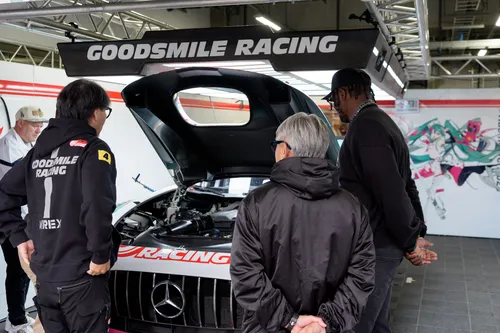
The second photo shows Ebukam posing with Tatsuya Kataoka, the team’s veteran championship-winning race driver.
In the third photo, Ebukam leans forward to inspect the race engine intently. His posture conveys genuine passion and respect as a true car enthusiast eager to learn about the engineering behind a world-class GT race car.
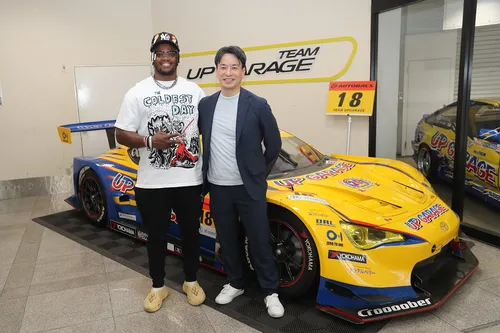
Here is a special shot of Ebukam visiting the Yokohama Machida flagship store of UP GARAGE alongside Eiichi Kono, President of Up Garage Group. Behind them stands the TEAM UP GARAGE “NSX GT3” (No. 18) that competed in SUPER GT. Revered by JDM fans globally as a haven for used performance car parts, UP GARAGE represents the heart of hands-on Japanese tuning culture—and Ebukam jumped right into it.
During his UP GARAGE visit, a special meet-and-greet was arranged with a local Nissan Fairlady Z (Z33) owner named Aki (X: @HANDS_OF_GLORY_). Ebukam reportedly asked detailed questions about Aki’s custom hand-built parts.
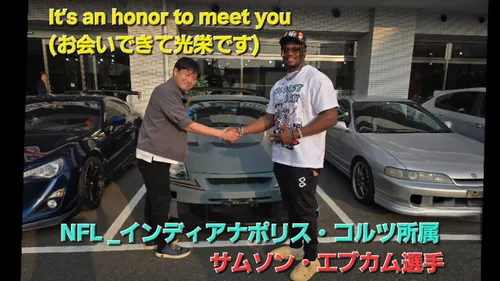 Footage of their interaction was shared in Aki’s YouTube video (Ebukam appears around the 7-minute mark):
4. JDM on the Streets
Samson Ebukam
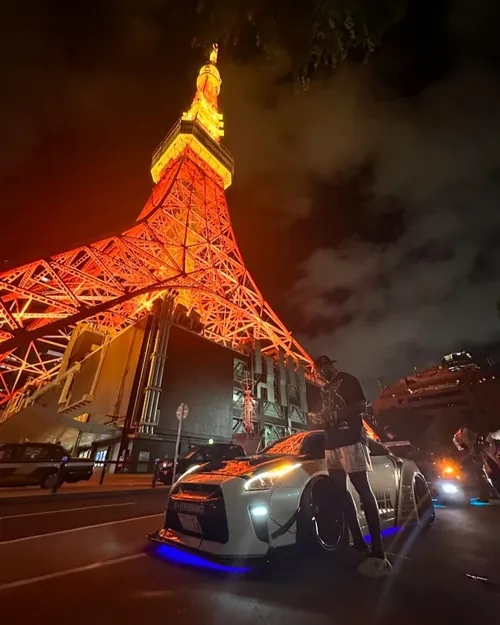
Shot from an extreme low angle looking up at the glowing structure of Tokyo Tower, a Liberty Walk Nissan GT-R (R35) rests softly under blue neon lighting. A “LB★PERFORMANCE” plate covers the front license plate, suggesting this was a custom-guided hospitality tour arranged by Liberty Walk for the visiting NFL athlete.
Siran Neal
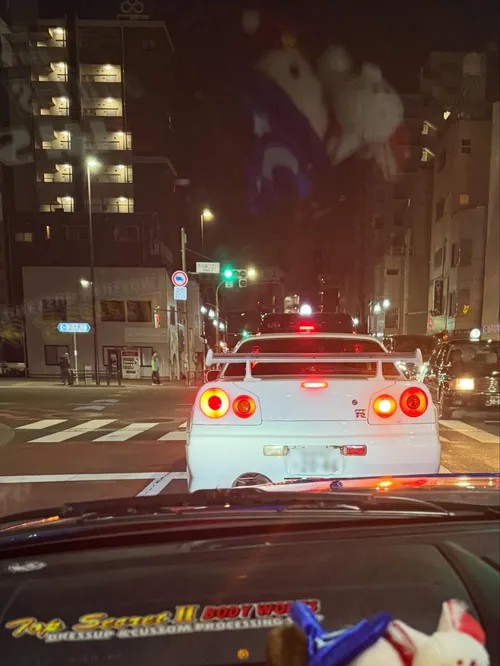
A candid snapshot taken from inside a car while stopped at a red light at a Tokyo intersection. In front of him sits a Nissan Skyline GT-R (BNR34)—a legend celebrated by car lovers around the globe. While seeing one driving through daily traffic might be a regular sight in Japan, it remains a rare and revered sight for foreign JDM fans.
Seeing this iconic car right in front of him, Neal naturally pulled out his smartphone from the passenger seat. Unlike a staged tourist photo, it captures the spontaneous excitement of an unexpected street encounter.
A decal from the legendary Japanese tuning shop “TOP SECRET” is visible on the dashboard in the foreground. It’s a simple Tokyo night scene, yet filled with details that any car enthusiast would instantly notice.
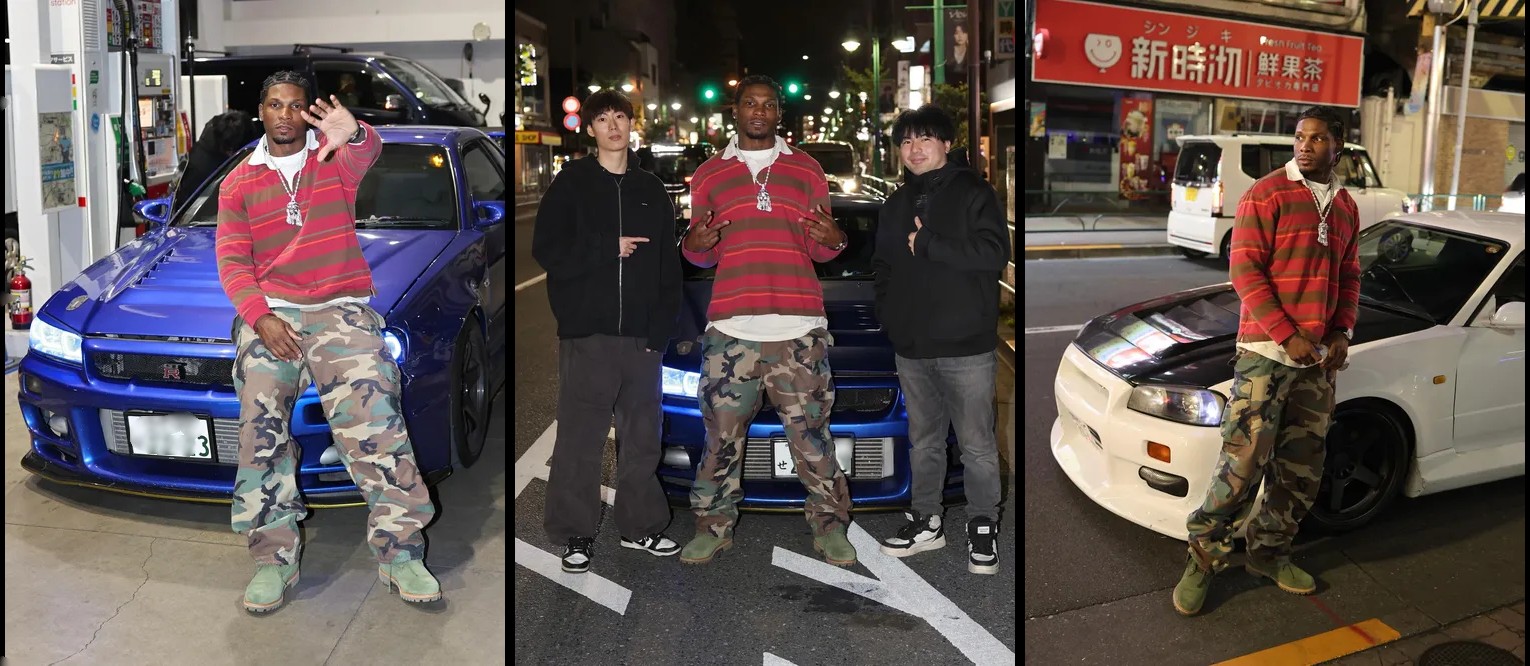
Another shot of the same Skyline GT-R (BNR34). Since Neal is wearing the same outfit as in his Daikoku PA photos, this street photo was likely taken on the drive back from or during the night meet, capturing the lingering excitement of a night drive among fellow enthusiasts.
Isaac Guerendo
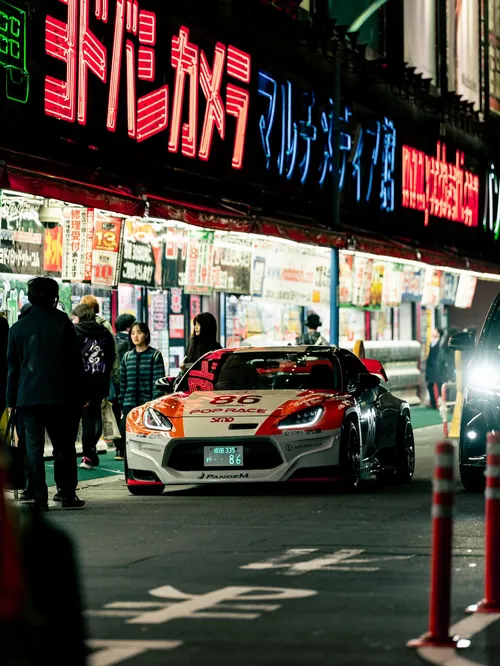
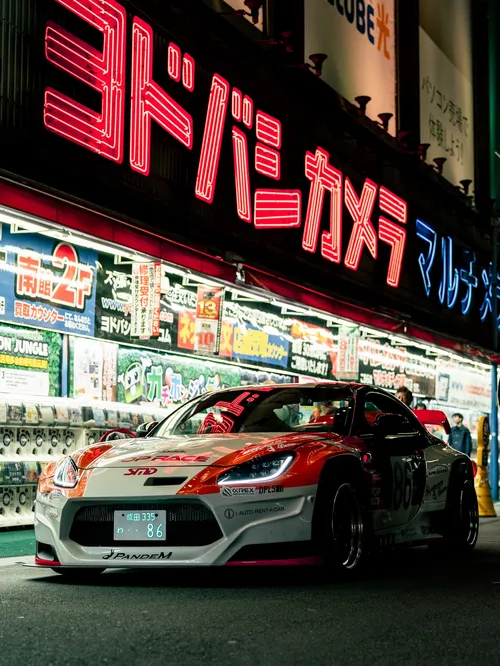
Captured in front of Yodobashi Camera, a massive electronics retail landmark in Shinjuku. The vehicle is a PANDEM-spec Toyota GR86 operated by I AUTO RENT-A-CAR, a rental service specializing in sports and custom vehicles. Under the vivid red neon signs of Shinjuku’s night, the widebody machine looks almost like a race car dropping straight into the urban crowd.
Ricky Pearsall
Shot from nearly the exact same location as Guerendo. As 49ers teammates drafted in the same class traveling together, there is no doubt they captured these moments side-by-side. Where Guerendo opted for a wider pull-back shot, Pearsall went for a low-angle close-up that emphasizes the aggressive front bumper and neon reflections, giving it a distinct cyberpunk feel.
Eric Kendricks
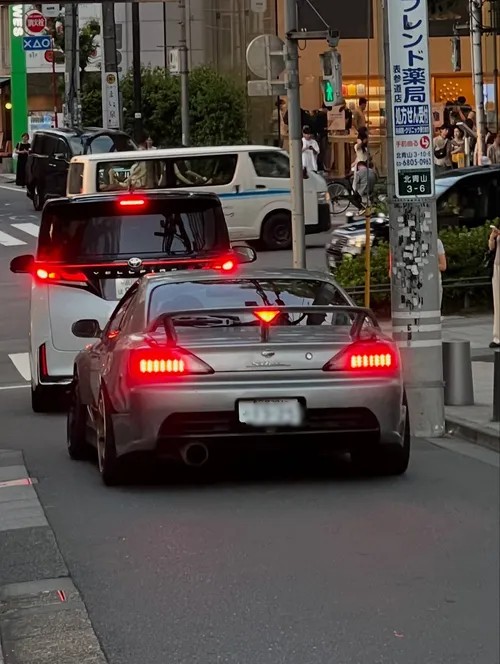
While waiting at a traffic light in Minami-Aoyama, Kendricks focused his camera on a clean Nissan Silvia (S15).
Widely celebrated overseas as an icon of Japanese drift and street tuning culture, the S15’s sleek LED taillights and rear aero form stand out even amidst Tokyo’s sophisticated city backdrop. Spotting a clean S15 driving through ordinary Tokyo traffic, Kendricks immediately snapped a photo—capturing a fleeting moment that might seem ordinary to locals, but holds special meaning to an international car enthusiast visiting Japan.
Conclusion: A Shared Passion for JDM Across Borders
The world of “JDM” was once something these players could only experience through video games or movie screens. Seeing them now—having achieved success as elite professional athletes—visiting Japan to connect directly with the cars, people, and culture they admired tells a compelling story.
From the midnight energy of Daikoku PA to custom culture hubs like Liberty Walk and UP GARAGE, and all the way to the pit lanes of Fuji Speedway—
What these NFL players brought back in their photo albums was far more than typical tourist sightseeing. They captured genuine encounters with Japanese sports cars, tuning subcultures, and the passionate local communities that keep them alive.
Japanese cars and street culture might feel familiar and ordinary to those living in Japan, but seen from across the ocean, they represent a legendary world that dedicated enthusiasts have dreamed of experiencing for years.