Godzilla, Yakuza Lore, and Cyberpunk Vibes: NFL Stars in Kabukicho
Featured Collection
Shinjuku’s Kabukicho is widely regarded as Japan’s largest red-light and entertainment district. Often dubbed the “Sleepless City” (Fuyajo), its chaotic, neon-drenched atmosphere served as the direct inspiration for Kamurocho in the hit video game series Like a Dragon (formerly Yakuza) and was immortalized in the opening scenes of Sofia Coppola’s film Lost in Translation.
The striking contrast between glowing neon signs and towering skyscrapers evokes the dystopian aesthetic of Ridley Scott’s Blade Runner and William Gibson’s cyberpunk classic Neuromancer. For visiting NFL players, this district offers a uniquely dense dose of exotic urban energy. How did these elite athletes capture this iconic neighborhood through their camera lenses?
The Unfiltered History of Kabukicho: From Entertainment Hub to Yakuza Turf
To understand Kabukicho, one must look back at its post-WWII history. Devastated by air raids, the area was designated for a visionary redevelopment project: a wholesome, family-friendly entertainment district. The center of this plan was a proposed Kabuki theater, which gave the neighborhood its name.
While the theater was never actually built, Kabukicho quickly filled up with movie theaters, bowling alleys, arcades, and performance halls. However, as television gained popularity in the postwar era, foot traffic declined. To resolve disputes and manage show business, the local entertainment industry became deeply intertwined with the Yakuza (Japanese organized crime). Over time, the neighborhood evolved into Tokyo’s primary nightlife district?making Kabukicho the only logical setting for SEGA’s Like a Dragon series.
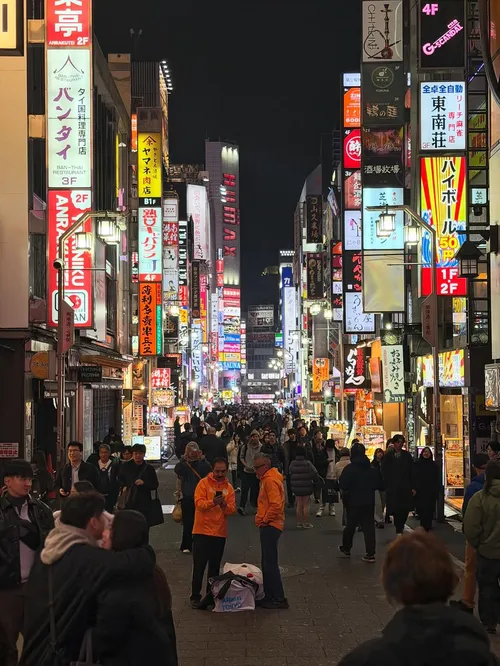
1. Kabukicho Ichibangai Street
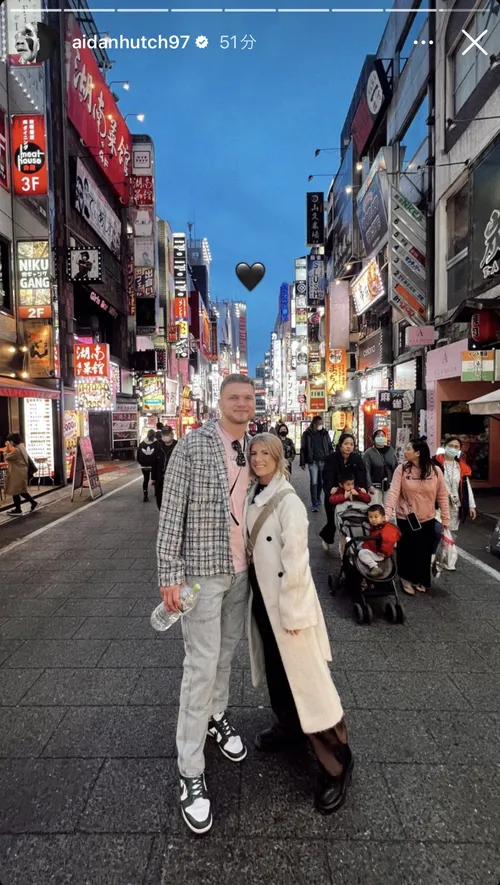
Aidan Hutchinson
This shot was taken right underneath the iconic red archway at the entrance of Kabukicho Ichibangai?the real-life counterpart to the “Tenkaichi Street Gate” in Like a Dragon. In the distance, a massive video screen lights up the street as Hutchinson and his group walk toward it, framing a symbolic transition from the otherworldly neon maze back into reality.
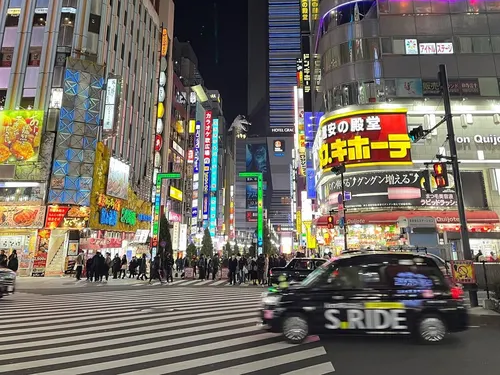
K.J. Wright
Also captured near the Ichibangai archway, this photo prominently features the “HUMAX” neon sign. HUMAX was one of the foundational entertainment companies that helped rebuild postwar Kabukicho by opening theaters and cinema complexes. Today, the building still houses a bowling alley and event spaces, standing as a historical symbol of the area’s legacy.
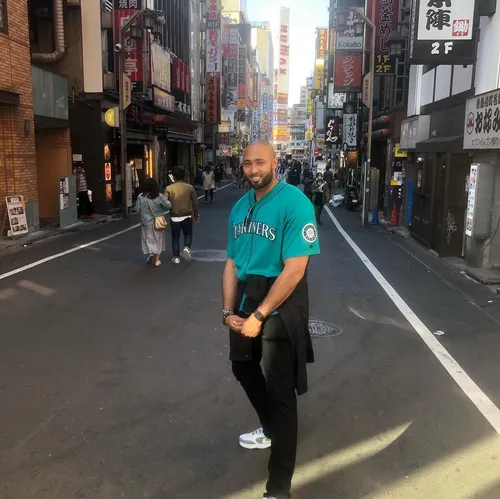
Zach Harrison
Moving further down Ichibangai Street, Harrison captured the overwhelming sensory overload of Kabukicho. While the mismatched signs jut out at chaotic angles, the perspective naturally draws the eye straight down the corridor toward the HUMAX building, condensing the raw energy of the district into a single frame.
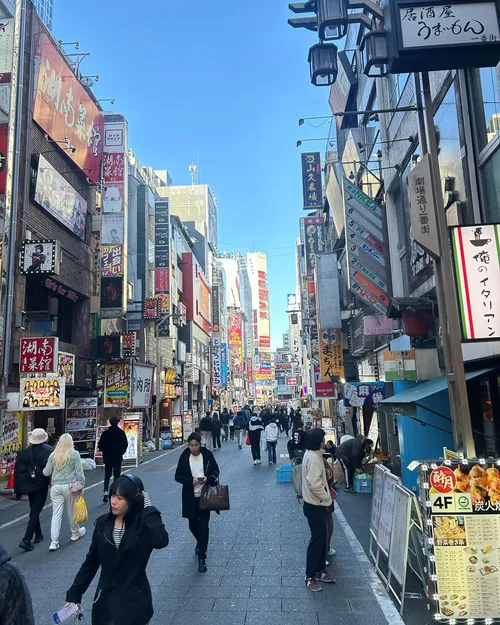
Malik Turner
Taken from virtually the exact same vantage point as Harrison’s shot, this nighttime capture completely changes the mood. The alley transforms into a glowing tunnel encased in a “wall of light.” Filled with international tourists and night-crawlers, it perfectly encapsulates the feverish atmosphere of the “Sleepless City.”
Quentin Lake
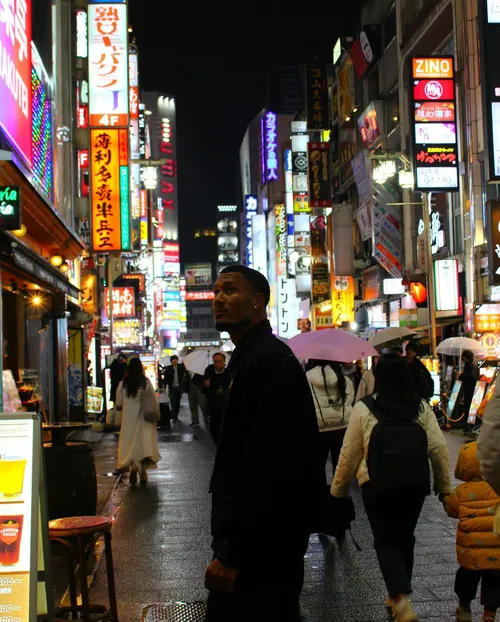
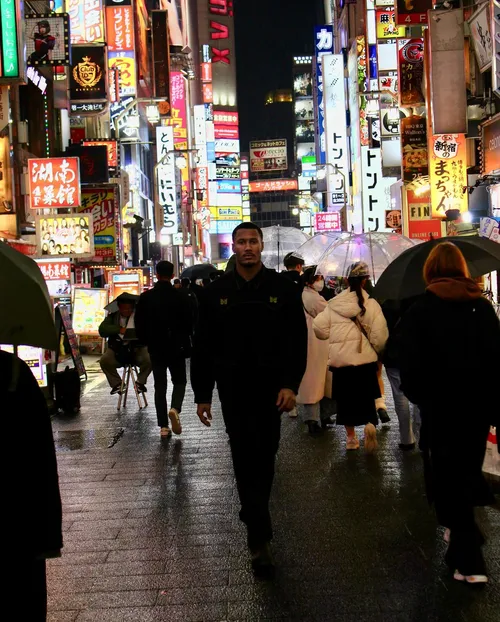
Positioned dead center in the middle of the street, Lake creates a dramatic contrast with his surroundings. Surrounded by towering signs in a foreign language, the first photo captures the disorientation of an outsider wandering a strange city. The second image?walking solo through the rain without an umbrella?evokes a profound sense of cinematic solitude, reminiscent of a melancholy scene straight out of Lost in Translation.
2. Central Road (Godzilla Road)
Running parallel just east of Ichibangai is Central Road. Widened and modernized during recent municipal cleanup campaigns, this boulevard leads directly to the Shinjuku Toho Building. Toho?the legendary Japanese film studio behind the original Godzilla franchise?installed a massive, life-sized Godzilla head looming over the building’s terrace, making this street the poster child for contemporary Kabukicho redevelopment.
Ogbo Okoronkwo
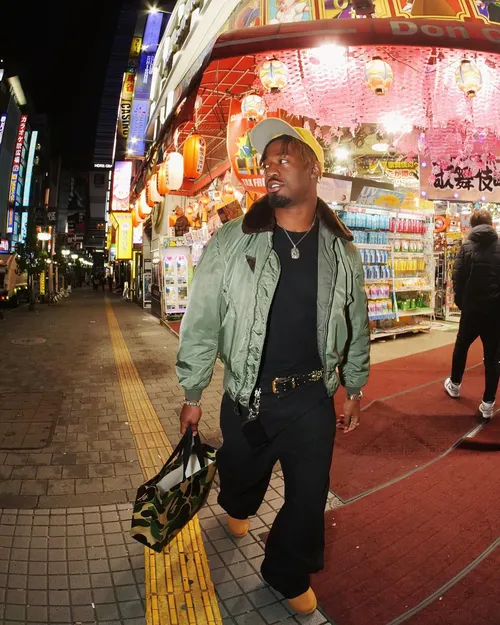
Posed near the entrance of Central Road, Okoronkwo captured the dazzling facade of Don Quijote (DonKi). As a 24-hour mega-discount store, DonQuijote is a staple icon of Japan’s hyper-consumerism?and an instantly recognizable spot for Like a Dragon gamers as the go-to shop for restocking health items.
Zach Harrison
Walking further down Central Road toward the Toho Building, Harrison’s shot shows the Godzilla head peeking out in the upper-left corner. Compared to Ichibangai, the wider walkways, street trees, and well-lit chain stores reflect how this section has been sanitized into a safer, pedestrian-friendly promenade for tourists and families.
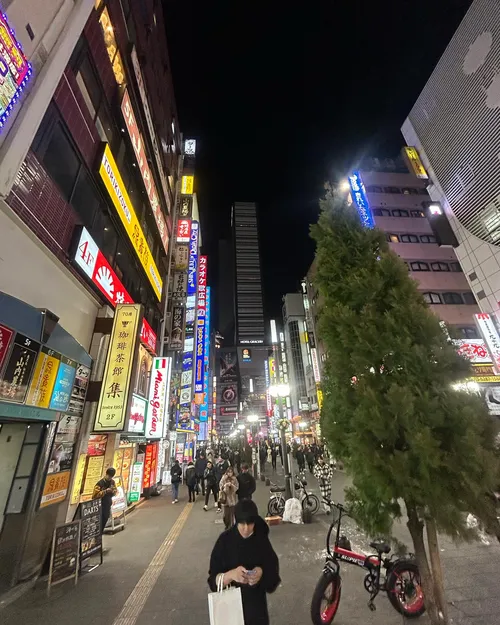
Jackson Howes
Approaching the base of the Shinjuku Toho Building, Howes tilted his camera straight up to fill the vertical frame. This dramatic low angle creates an immersive, cinematic perspective, making it feel as if the kaiju monster is actually towering over the streets of Tokyo.
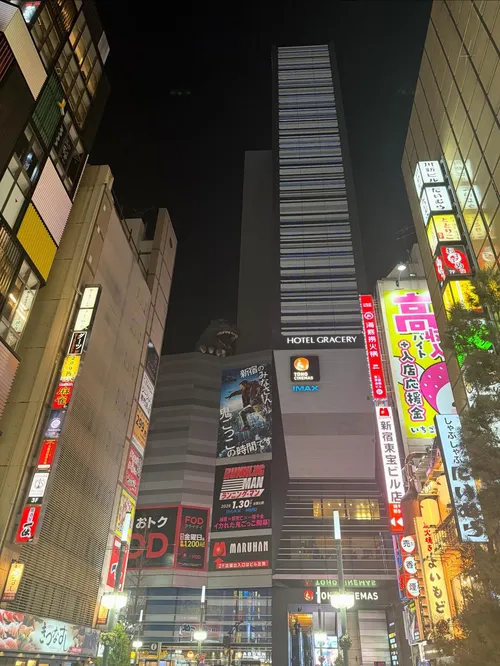
Mike Green
Though shot near the same location, Green takes a strikingly different approach. Capturing his own back, the surrounding buildings and pavement form a clean, single-point perspective leading directly to Godzilla. By choosing a Point-of-View (POV) angle rather than a standard low-angle shot, the streetscape itself becomes the hero of the composition.
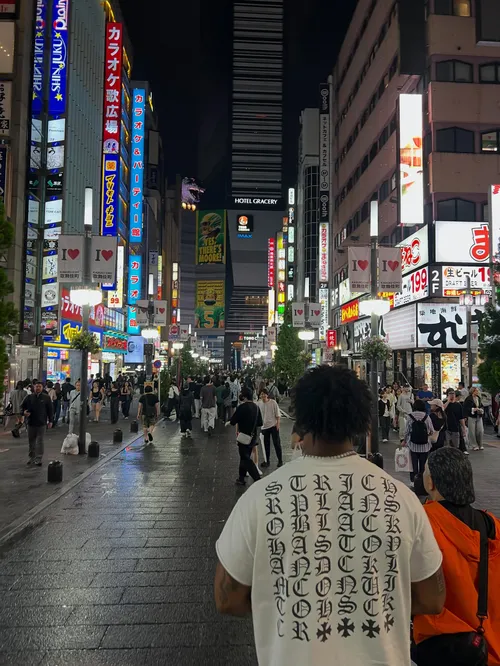
Marshawn Lynch
Facing back toward Shinjuku Station with the Toho Building behind the camera, this casual shot highlights Lynch strolling through the afternoon crowd. The relaxed body language of Lynch and his companions offers a rare, grounded look at a superstar casually taking in the everyday rhythm of Tokyo.
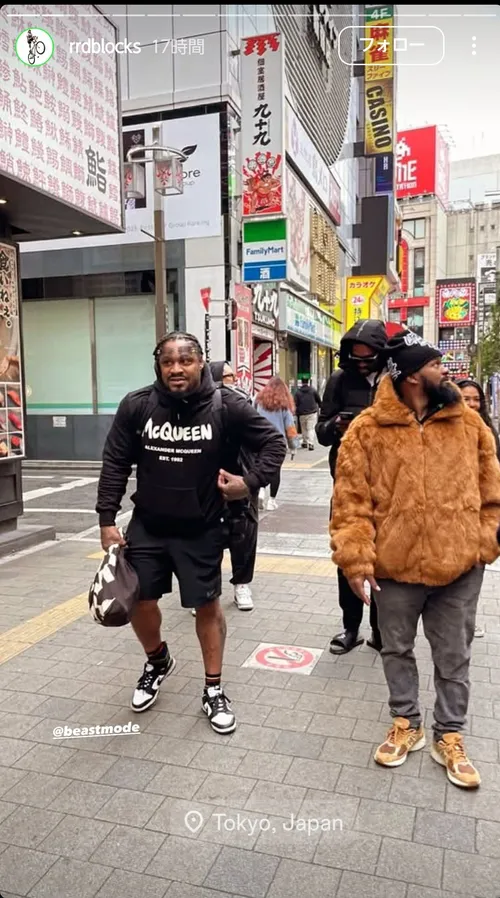
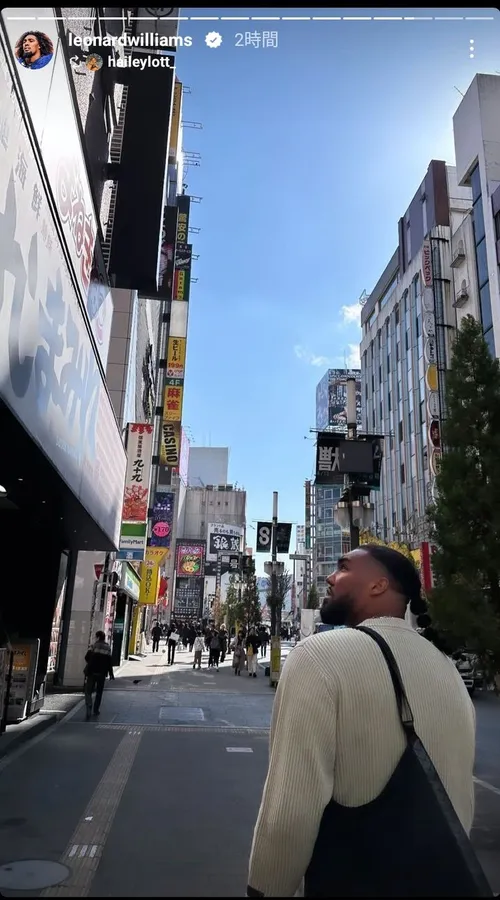
Leonard Williams
Taken in a similar location to Lynch’s photo, this frame focuses entirely on Williams in the crisp afternoon light. Looking up at the surrounding high-rises, his gaze lands on a sign for Sushimamire (a local sushi chain). His genuine curiosity toward the unfamiliar Japanese signage makes for an unusually refreshing urban snapshot.
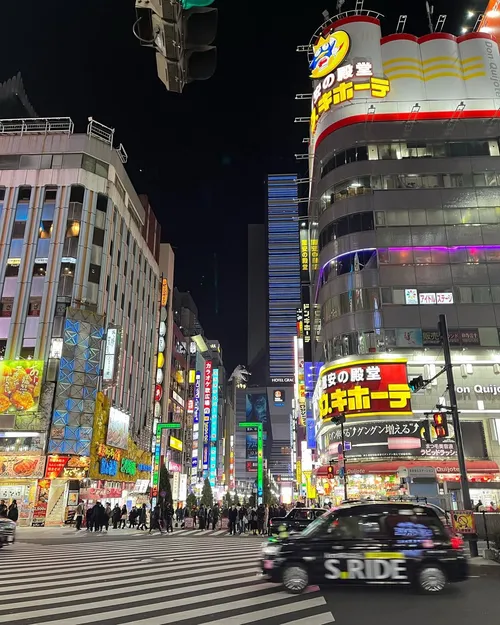
Jaelan Hawkins
Captured from across Yasukuni Dori?the major avenue separating Shinjuku Station from Kabukicho?Hawkins�f shot frames the glowing red and yellow lights of Don Quijote, the inner neon glow of Central Road, and Godzilla lurking in the distance, capturing the sheer scale of the district.
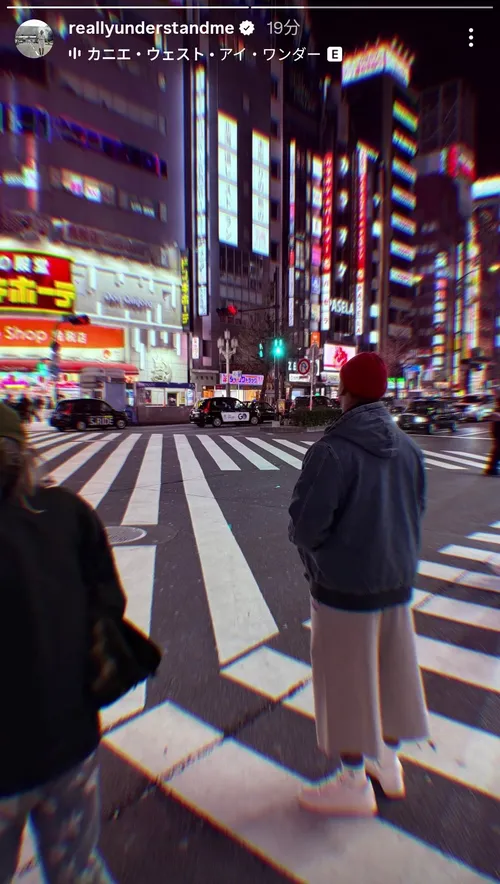
David Montgomery
Also taken from the main intersection along Yasukuni Dori, Montgomery stands right on the threshold dividing the ordinary city from the neon wonderland of Kabukicho. Capturing his silhouette as he gazes into the sea of lights creates an intensely cinematic moment filled with anticipation.
3. Sakura Dori Street
Located one block east of Central Road, Sakura Dori retains the tight, chaotic charm of old Kabukicho, standing in stark contrast to the nearby modernized boulevards.
Alec Pierce
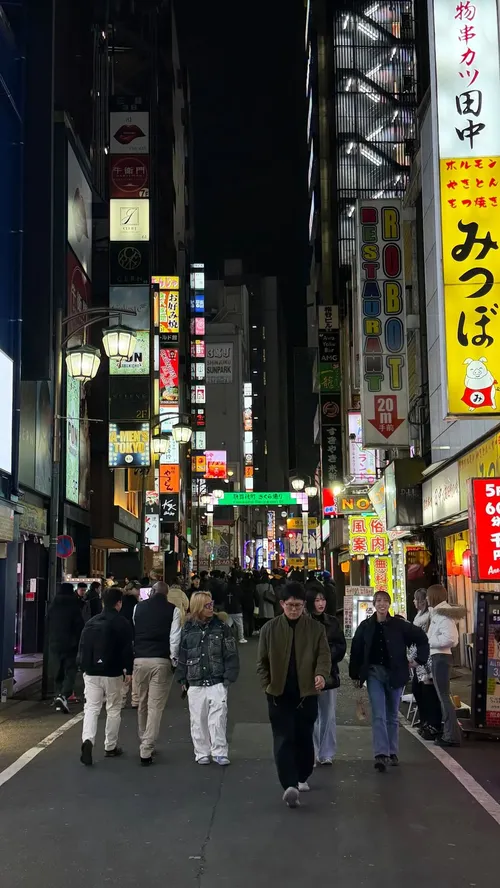
The tight narrow street flanked by claustrophobic buildings offers a peek into pre-redevelopment Kabukicho, complete with adult entertainment neon signs. On the right, you can spot the sign for the now-defunct “Robot Restaurant”?the legendary, bizarre dinner show venue that heavily defined Kabukicho’s cyberpunk image for international travelers in the 2010s.
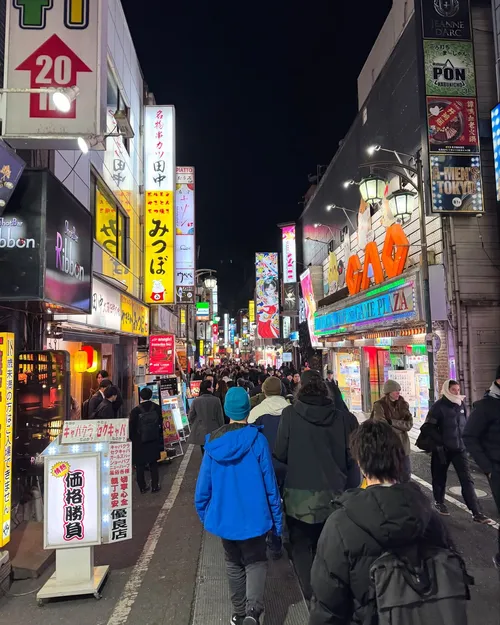
Malik Turner
Just a few dozen meters away from the clean pavement of Central Road, Turner captures the dense crowd and glowing alley signs of Sakura Dori. It’s a raw, vibrant street snapshot that highlights the gritty, authentic nightlife energy that Kabukicho is famous for.
4. Around Shinjuku Toho Building
Davante Adams
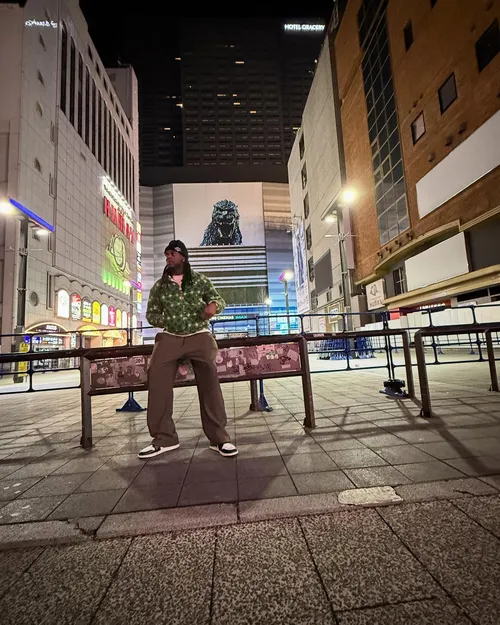
This photo was taken at the plaza on the west side of the Shinjuku Toho Building, famously known as “Toyoko.” In recent years, Toyoko has become a complex focal point of youth subculture, street culture, and social commentary in Tokyo. With the massive Godzilla graphic and Hotel Gracery towering in the background, Adams perched on the safety fence makes for a culturally captivating shot.
Isaiah Simmons
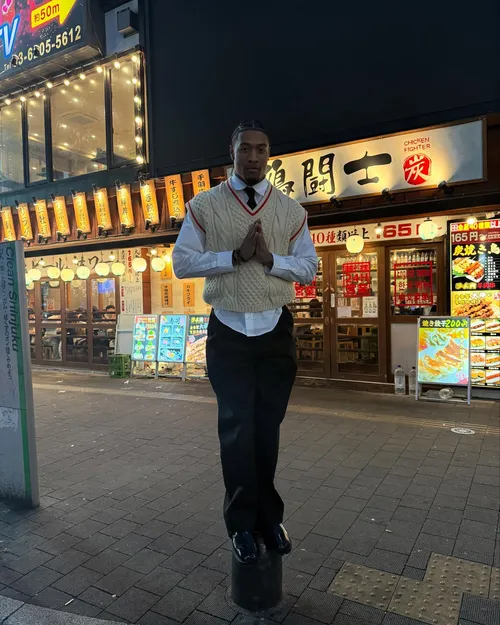
Simmons posed in front of Keitoushi (a local yakitori eatery) near the Toho Building. Balancing atop a concrete street barrier with a martial arts gassho (praying hands) pose, the juxtaposition between the bold Kanji sign and his athletic poise feels like a piece of spontaneous, contemporary street art.
Uchenna Nwosu
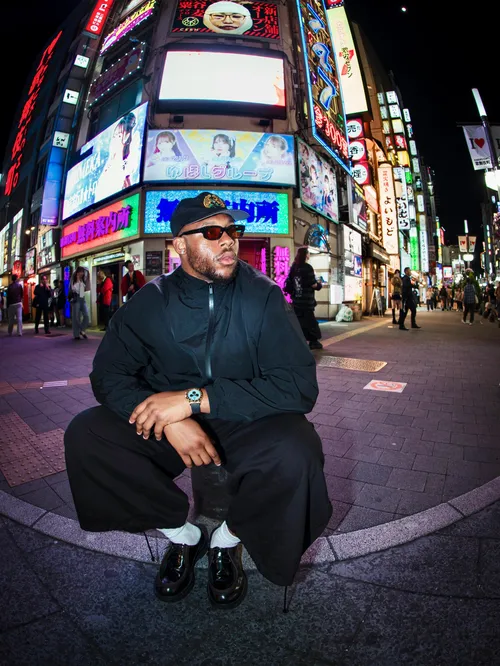
Utilizing a fisheye lens distortion, Nwosu centers himself while warping the surrounding alleyways and neon signs inward. Standing directly beneath a flashy sign for a Muryo Annaijo (free matchmaking/nightlife information booth that guides patrons to host clubs and adult entertainment venues), this photo unapologetically embraces the underground aesthetic of Tokyo at night.
Summary
From the iconic archway of Ichibangai to the wide-open views of Central Road, the crowded alleys of Sakura Dori, and the underground neon of the local backstreets, NFL players have captured Kabukicho in all its multi-layered complexity.
Whether reflecting cinematic solitude, embracing video game nostalgia, or diving headfirst into gritty street photography, these shots show how the physical titans of the gridiron experience the neon-lit wonder of Tokyo.