NFL Players Visit Kinkaku-ji: Stunning Kyoto Photos Through Their Lenses
Featured Collection
With a shimmering bronze phoenix on its roof and the radiant glow of roughly 44 pounds (20 kg) of pure gold leaf, Kinkaku-ji (officially known as Rokuon-ji) stands as one of Japan’s most iconic landmarks. Built by the shogun Ashikaga Yoshimitsu in the late 14th century, it perfectly embodies the wealth and artistic sophistication of the historic Kitayama Culture era.
Its signature main pavilion, the Shari-den (Reliquary Hall), features a truly unique three-story architecture where each tier represents a different style: the 1st floor reflects the aristocratic Shinden-zukuri style, the 2nd floor the samurai Buke-zukuri style, and the 3rd floor the Zen Buddhist hall style. Shogun Yoshimitsu designed this magnificent structure to reflect upon the tranquil “Kyoko-chi” (Mirror Pond), visually recreating the Buddhist concept of Pure Land (heaven on Earth). Designed as a classic stroll garden, every surrounding hill and forest was meticulously calculated into its layout, creating a breathtaking harmony between nature and architecture.
Today, we take a look at the irresistible charm of Kinkaku-ji through the lenses of visiting NFL players—proving that no matter who takes the shot, this place is impossible to look bad.
Ronnie Stanley
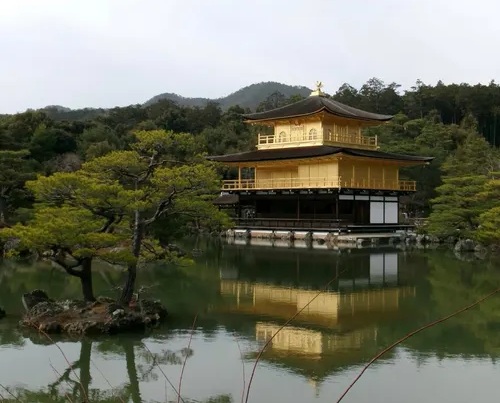
Judging by the angle and the pine tree extending over the pond, this first shot appears to be Stanley’s very first view of Kinkaku-ji as he emerged from the main approach path. Capturing the sheer excitement of that first impression without worrying about the crowds around him, it’s a wonderfully candid, immersive shot.
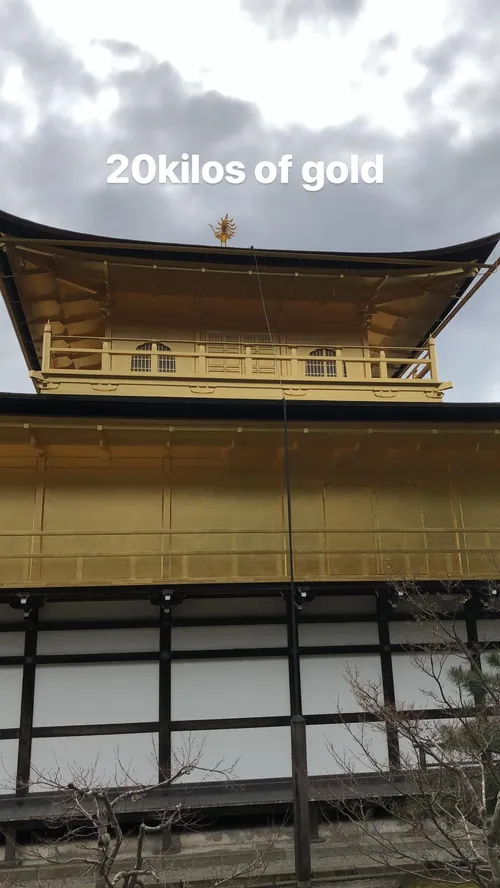
Here is another capture by Ronnie Stanley. Shot from up close looking upward, it creates a powerful, high-impact angle. His caption “20 kilos of gold” (roughly 44 lbs) refers to the astounding weight of the gold leaf coating the temple.
A’Shawn Robinson
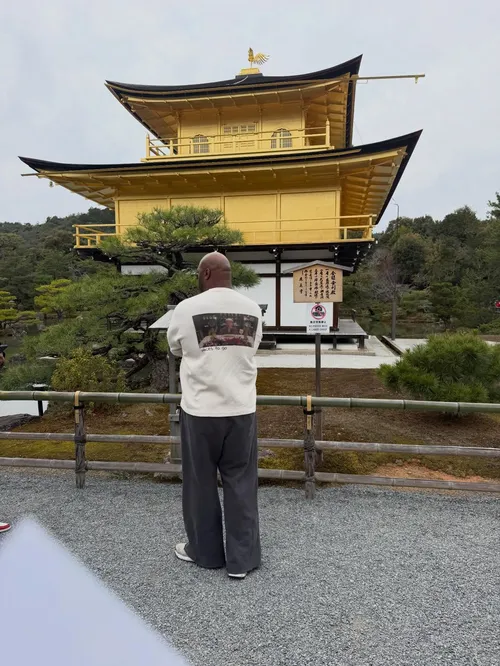
With A’Shawn standing in the foreground, this shot offers a fantastic sense of scale. Intentional or not, the contrast between the American athlete, the graphic design printed on his back, and the centuries-old Japanese architecture creates a captivating blend of modern culture and deep history.
Stefon Diggs
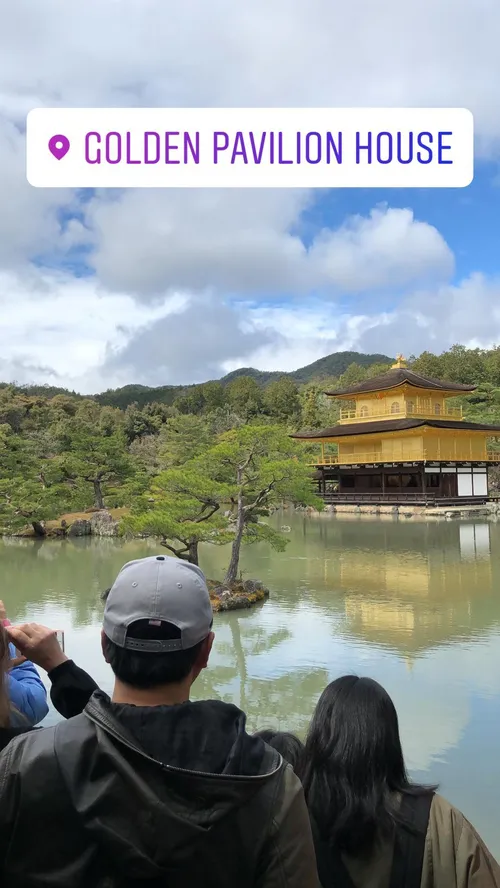
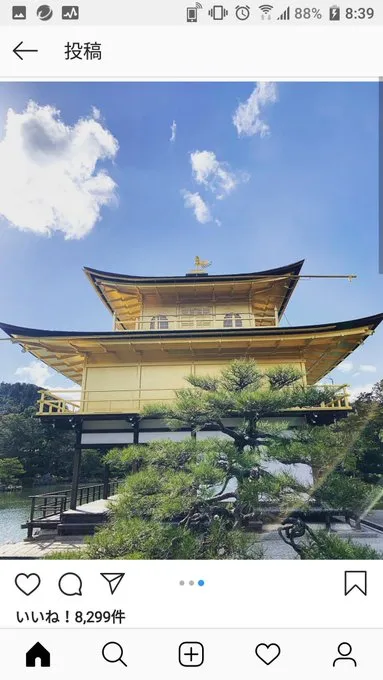
A striking shot featuring Kinkaku-ji gleaming against a backdrop of blue skies and fluffy white clouds. Diggs perfectly captured the temple’s distinct three-tiered architecture, with the pine tree reflecting softly on the lower right adding a wonderful artistic accent.
Drake Maye
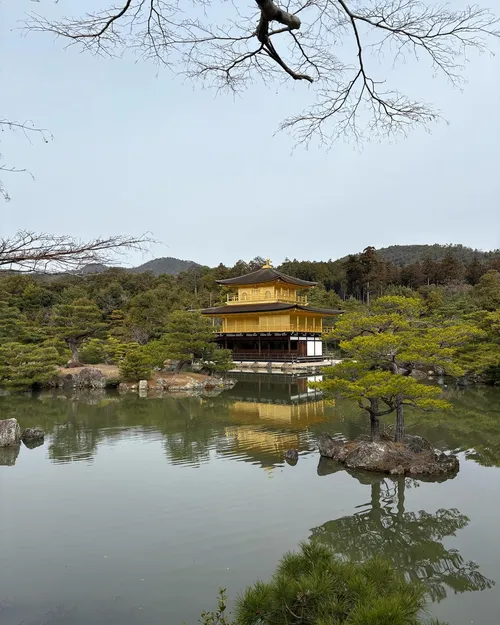
Maye snapped a textbook masterpiece: the famous “Upside-Down Kinkaku” reflecting in the Mirror Pond, Mount Kinugasa in the background, and the surrounding pine trees framing the landscape. The weathered branch arching over the top serves as a natural frame that elevates the composition.
Levi Onwuzurike
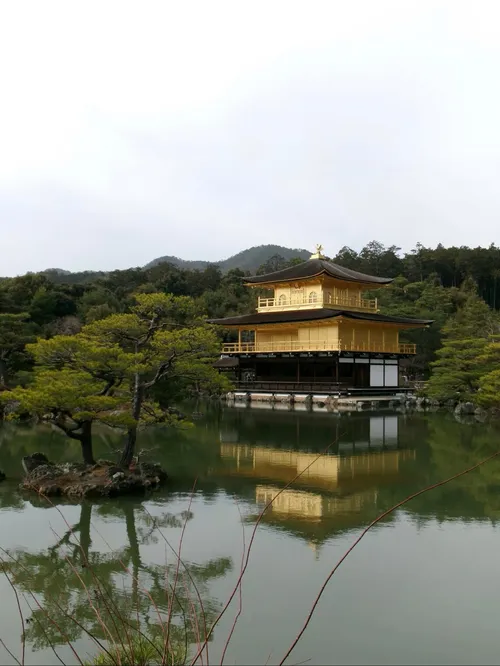
Another brilliant reflection shot. The mirror-like water and soft pastel tones evoke a profound sense of tranquility. Despite Kinkaku-ji being one of Kyoto’s busiest tourist destinations, Onwuzurike managed to capture a moment that feels completely peaceful and uncrowded.
Tom Brady
Tom Brady must have been deeply captivated by Kinkaku-ji, sharing a series of impressive photos from his visit.
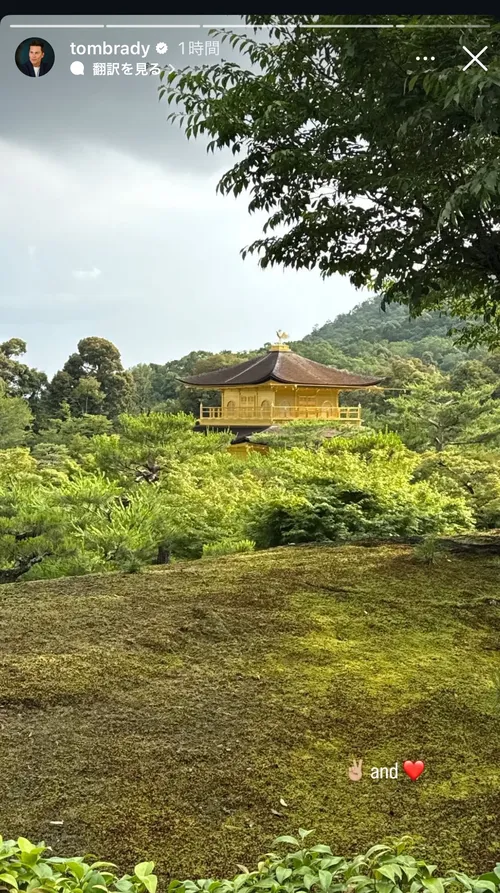
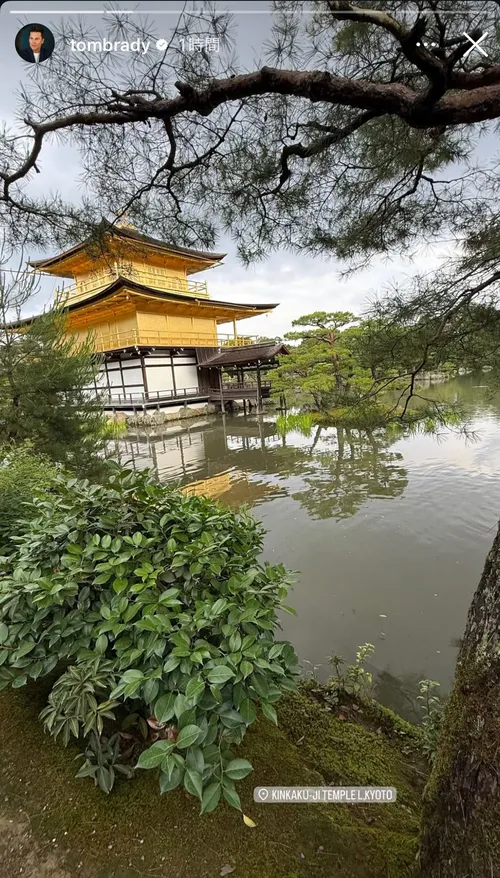
His first shot, taken from a higher elevation, layers the moss garden in the foreground, lush greenery in the middle, and the Golden Pavilion nestled against the distant mountains.
The second photo frames the temple beneath overhanging pine branches. It captures the essence of Wabi-Sabi—the traditional Japanese aesthetic that finds beauty in simplicity, rustic elegance, and the harmony between man-made structures and nature.
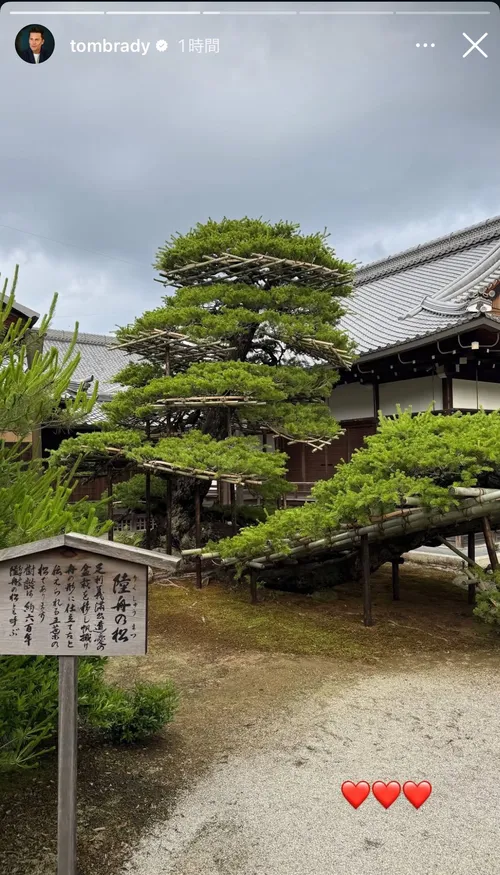
His third photo showcases the famous Rikushuu-no-Matsu (Land-Bound Boat Pine) on the temple grounds. Estimated to be around 600 years old and recognized as one of Kyoto’s Three Famous Pines, its branches have been meticulously trained to resemble a sailing ship heading out to sea—earning its name as the “boat on land.”
Kwity Paye
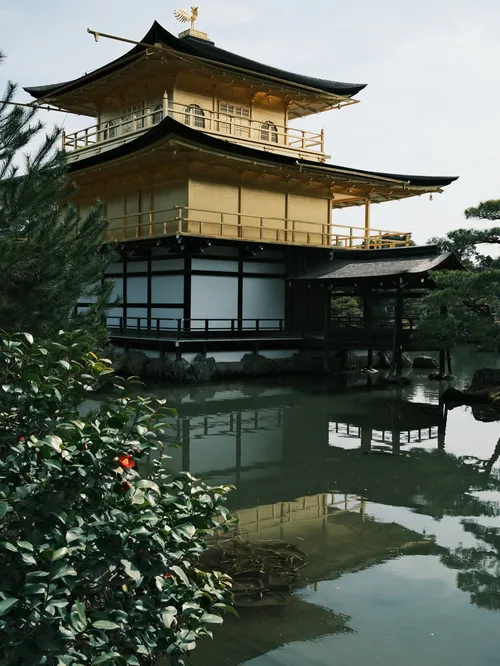
Shot from the northwest angle, Paye took a connoisseur’s approach by focusing on the Sosei—a small pavilion projecting over the pond on the first floor. Historically, shoguns and distinguished guests sat here to cool off while enjoying panoramic views of the garden. He captured the roof’s phoenix, the water reflections, and the dynamic depth of the structure, accented beautifully by red camellia flowers in the foreground.
Summary
From the surrounding mountains and forests down to the ripples in the pond, every inch of Kinkaku-ji was masterfully engineered to project heavenly beauty. Thanks to the depth of its traditional Japanese garden, virtually any angle yields a jaw-dropping photo. These shots reveal that these NFL players don’t just have elite athletic talent—they also possess a fantastic eye for photography and aesthetic appreciation.
We will continue to update this article as more NFL players share their amazing travel photos from Japan!